If you were to ask an ecologist to name the most problematic invasive species in our woodlands, they very well might mention buckthorn first. There are a variety of traits that this species has that helps it outcompete and displace much of our native vegetation. Unfortunately, it also takes a lot of time and effort to effectively control it and restore the native vegetation that existed long before its arrival.
What Is Common Buckthorn?
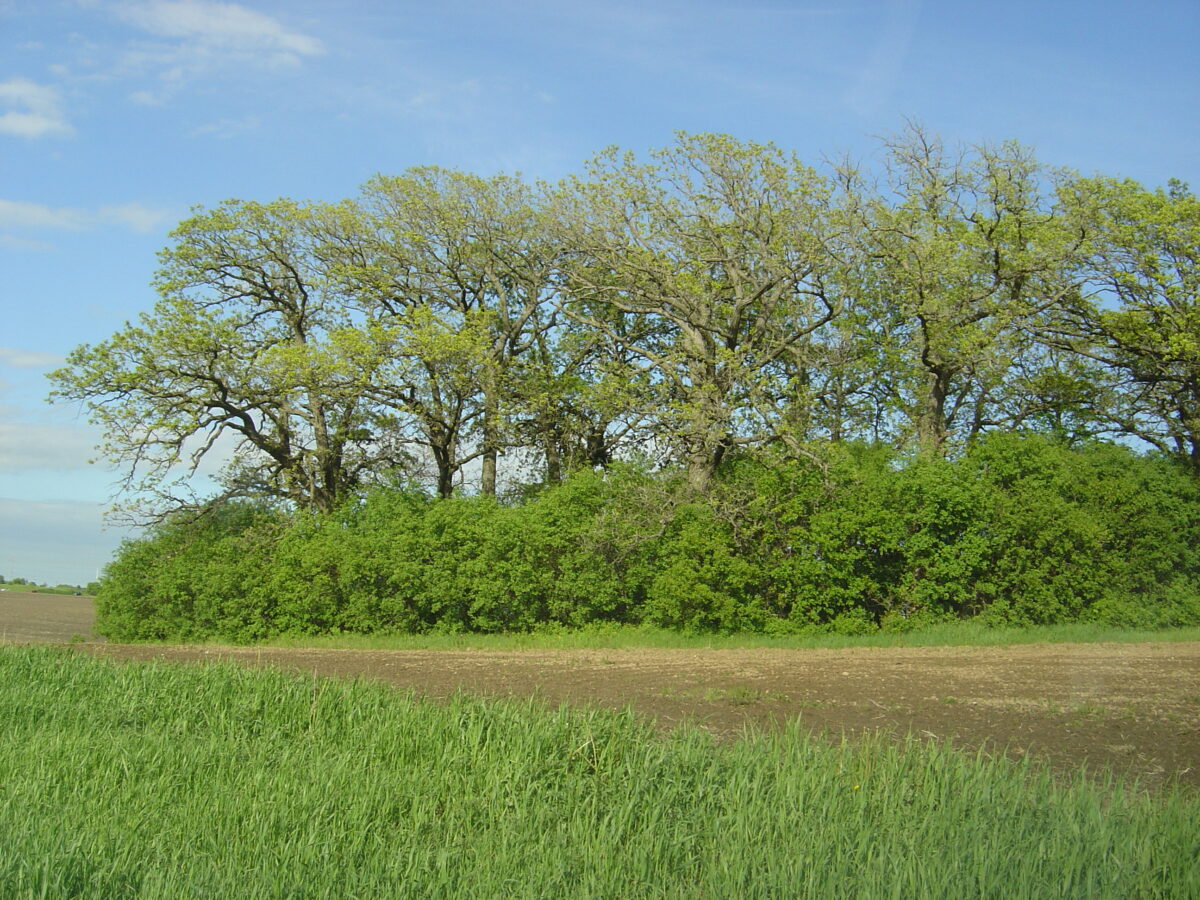
Common buckthorn is a small invasive tree that is commonly found in woodlands and savannas throughout the Midwest and Northeastern United States. This quick growing tree thrives in a variety of light conditions and will establish itself rapidly wherever its seeds may be dispersed. In fact, another non-native and invasive species, the European starling is a big contributor to the dispersal of buckthorn berries.
Buckthorn’s dense foliage, which appears early in the growing season and lasts until late in the fall, will quickly shade out ground level vegetation as well as smaller native trees and shrubs. Deer often ignore buckthorn foliage unless it is the only food source remaining for them in the fall. In addition, buckthorn is allelopathic which means it releases a chemical into the soil through its roots and leaves that will help prevent germination of other seeds in its vicinity.
Where Did It Come From?
Buckthorn’s native range is throughout much of Europe and western Asia. Due to its size and growth habit, it can easily be trimmed to form a dense hedge. This is the main reason it was brought over to the United States in the 1800’s. By the 1900’s buckthorn had escaped into the wild and had established in remote areas of the Northeast and Great Lakes regions.
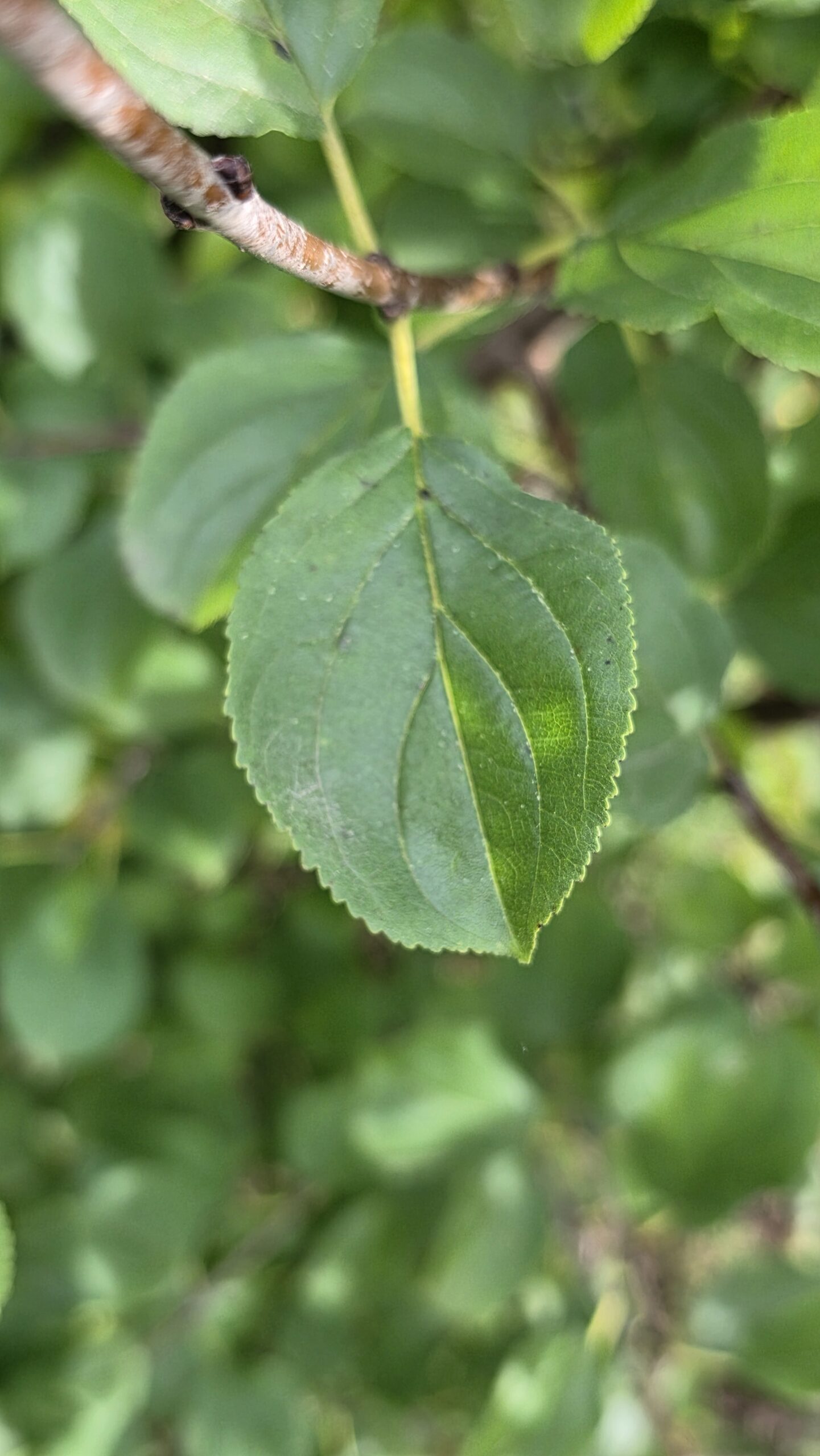
Buckthorn (Rhamnus cathartica) leaf which is described as having a quilted appearance. Photo by Mark Micek.
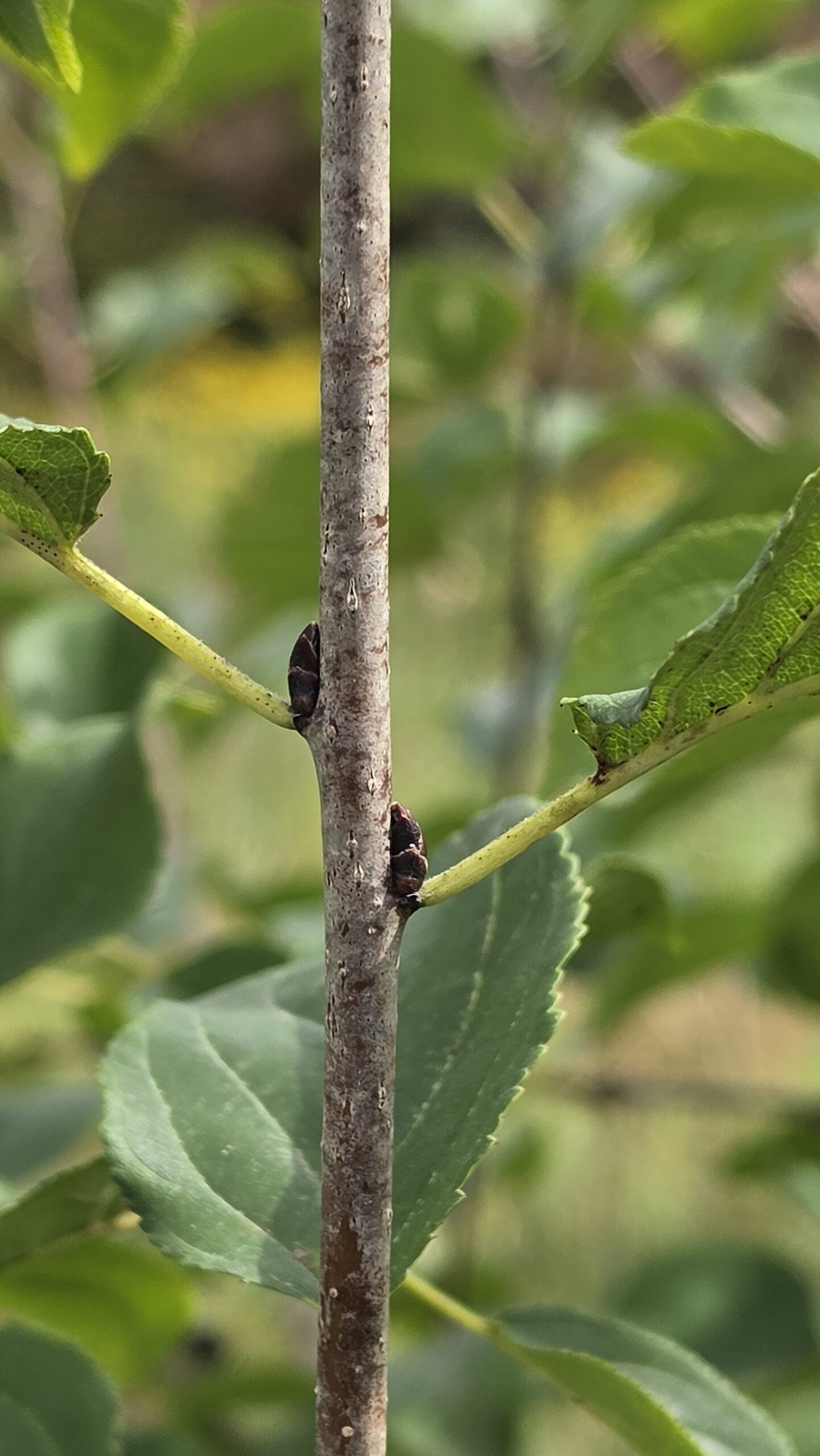
Stem of a buckthorn (Rhamnus cathartica) showing the closely alternate spacing of its buds. Photo by Mark Micek.
What Is Its Life Cycle?
As mentioned above, buckthorn starts off as a berry on a female plant and is often eaten by a European starling or other foraging bird. The berries pass quickly through the bird’s digestive system and are often deposited under the canopy of larger trees such as oaks, hickories, and maples. You may also notice buckthorn growing under power lines or other places where birds often perch.
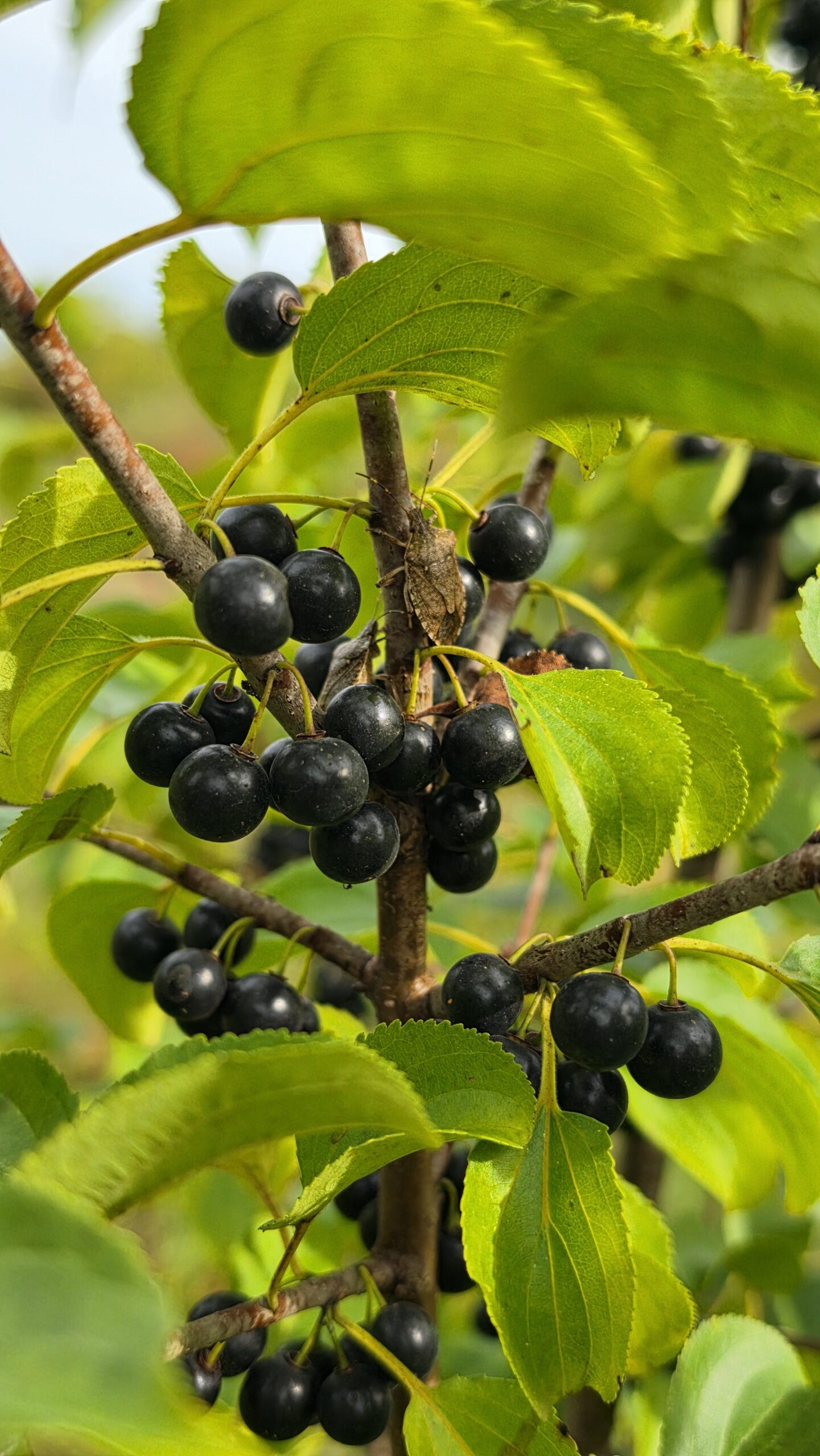
Once in the soil, the berries readily germinate under a large variety of conditions and can easily grow into a small tree in just a few years. Once mature, the tree will begin flowering in the spring with barely noticeable yellow-green flowers. In the late summer, black berries will begin to form on the female trees.
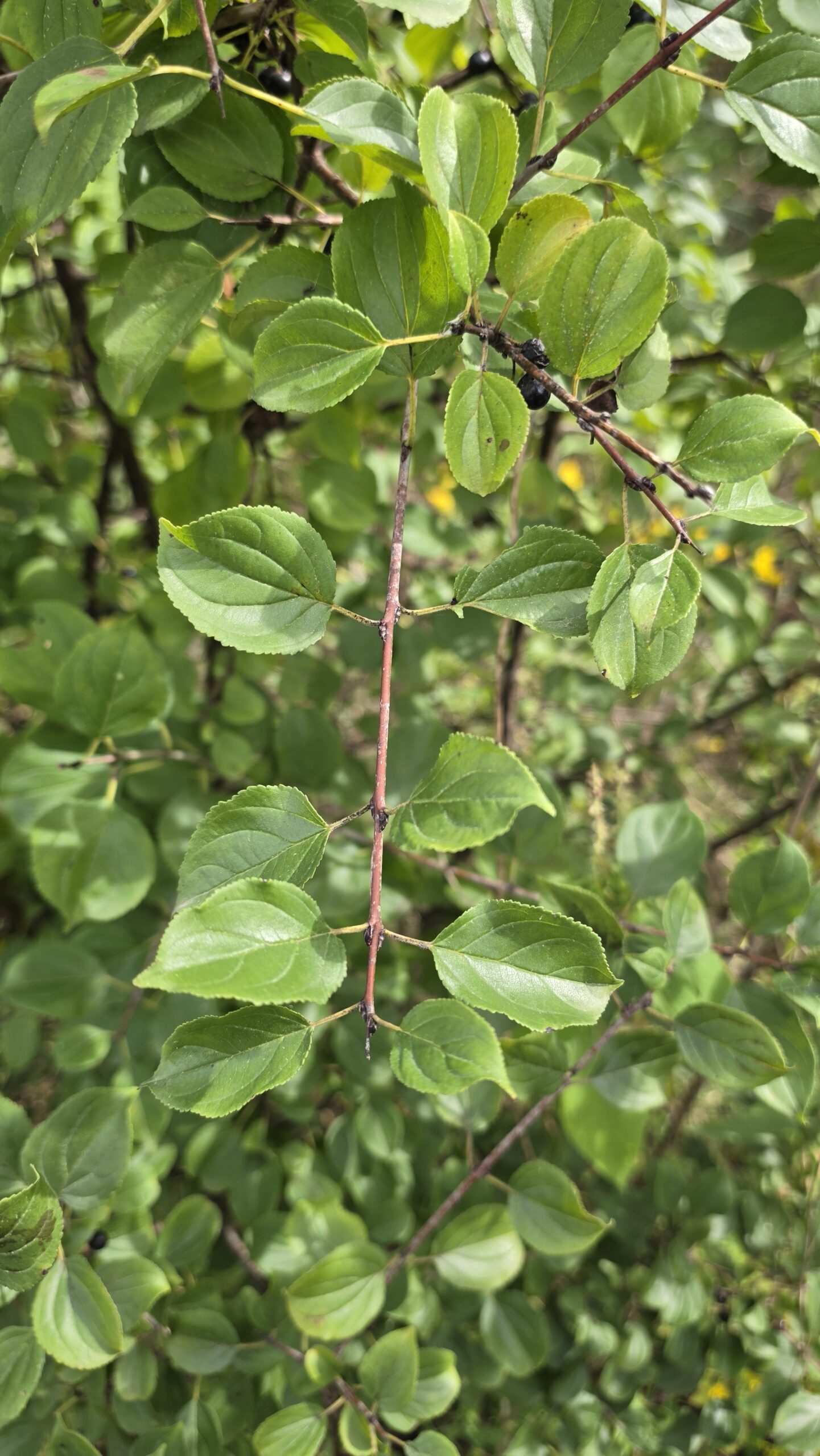
Buckthorn can be easy to identify as it has a few qualities that help it stand out. It is one of the first trees to leaf out in the spring, and its leaves remain green longer into the fall than our native trees. The leaves are consistently a dark green color, and the veins give it a “quilted” look. Its namesake relates to a small thorn often found on the tips of its branches, and its branching structure is described as closely alternate. If you’re not certain you are looking at a buckthorn, there is one test you can perform to confirm your ID. You can scrape away a small portion of the outer bark and if the underlying woody material is a dark orange, you likely have a buckthorn.
Buckthorn's (Rhamnus cathartica) quilted leaves growing in a closely alternate pattern. Photo by Mark Micek.
Black berries on a female buckthorn (Rhamnus cathartica) in the later summer. Photo by Mark Micek.
How Can You Control It?
With any woody plant, the usual method of control is to manually or mechanically cut and remove the stems. This can be done easily with hand saws if the buckthorn hasn’t grown too big. Often cutting the base of the stem with loppers, or once the stem has gotten larger, chainsaws may be recommended for removal.
Cut material can be stacked and burned in piles with the appropriate permits and precautions required in your area. Chipping is also an option, and the chips can be used for paths, or other landscaping projects. Berries, and therefore seeds, may be included in those wood chips, so you might have some saplings to deal with for a year or two in your woodchip beds.
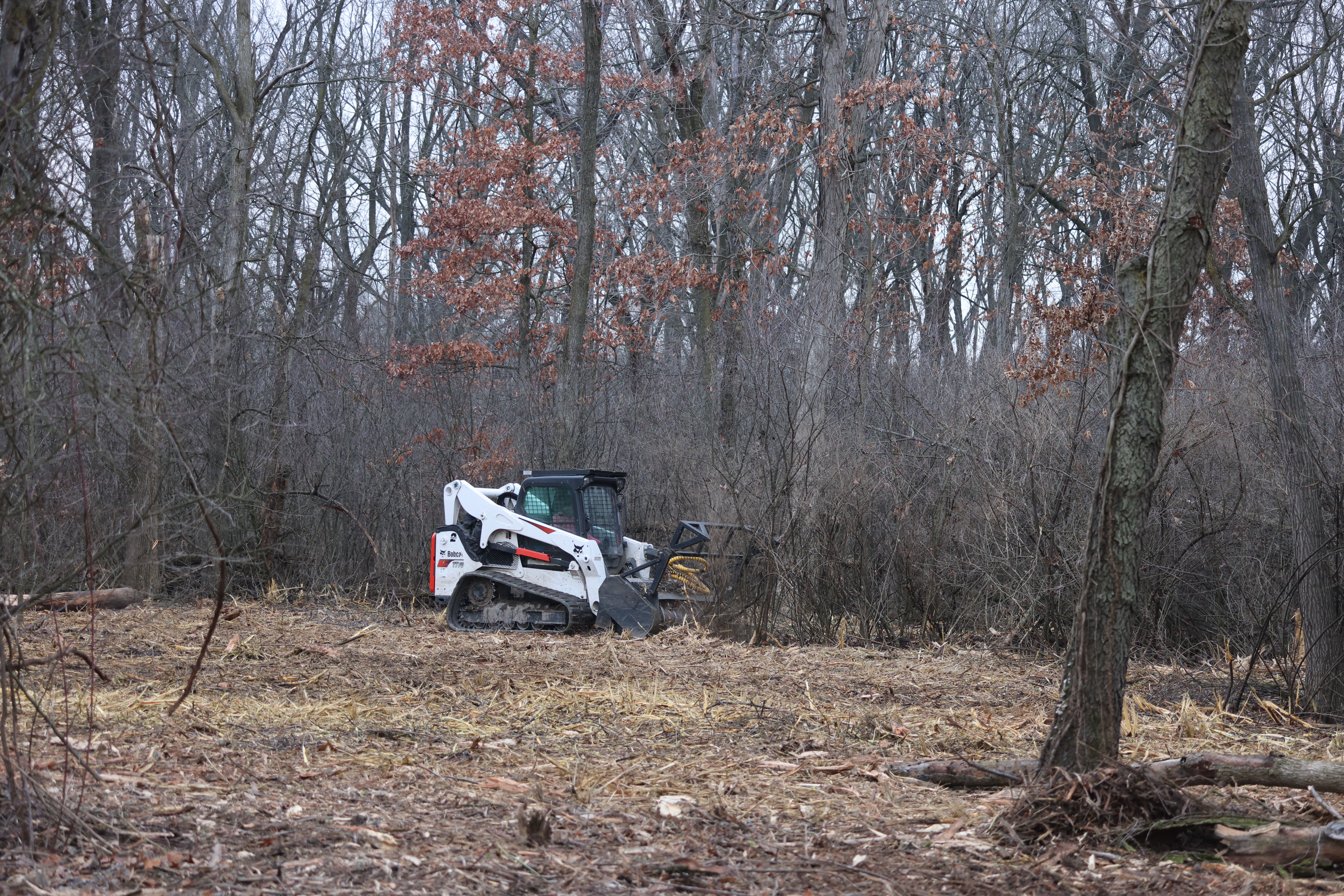
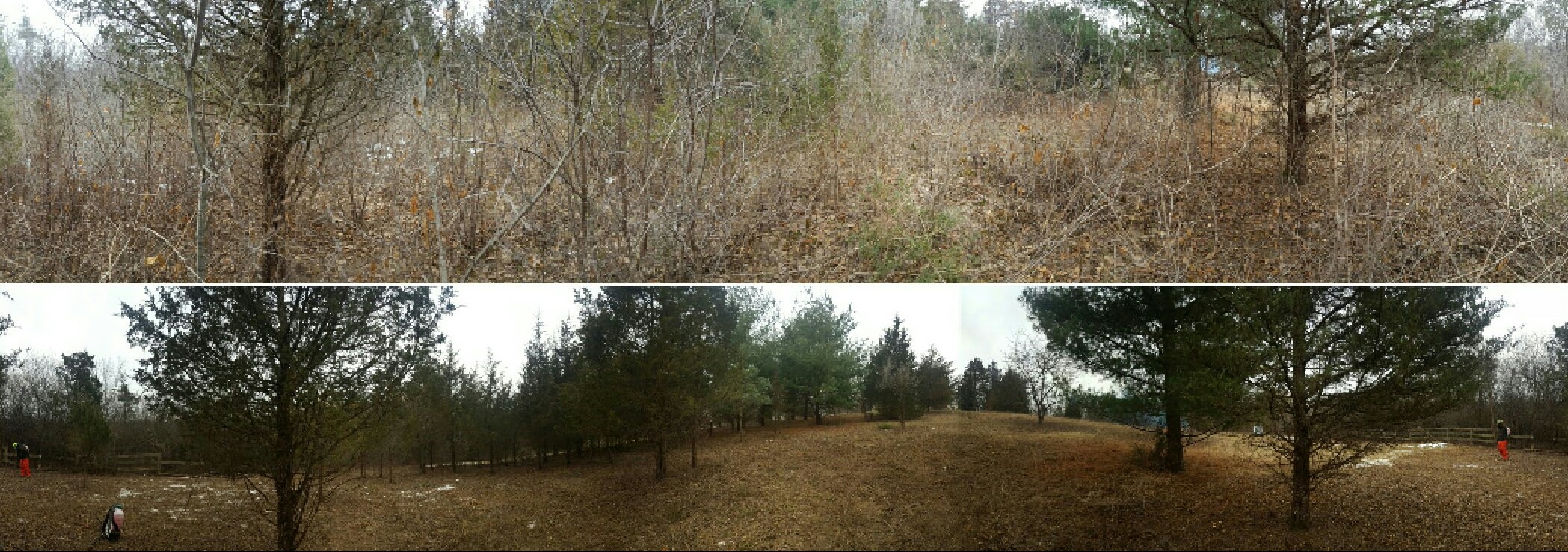
For larger areas of buckthorn, forestry mowing attachments on larger machinery can be used to cut and shred the standing buckthorn. While this method is much quicker, it certainly leaves a messy area with often thick layers of woodchips covering the ground. It will take a few seasons for those chips to degrade and for the understory vegetation to return.
Forestry mower grinding up buckthorn (Rhamnus cathartica) in an oak woodland. Photo by Mark Micek.
No matter what the cutting method, if an herbicide is not applied to the stumps, the buckthorn will likely resprout the first chance that it gets. To help prevent resprouting, an appropriate herbicide can be applied to the outer edge of the cut stump where the living bark tissue is located with a wicking or dabbing applicator. This will allow the herbicide to be taken down into the roots to kill the remaining underground plant structure. Even with a stump application you will likely see several small shrubby resprouts and new saplings in the spring.
While the new saplings can be manually pulled, the resprouts will be connected to a larger root system and will not come up so easily. Foliar applications of herbicide can be made by either carefully spraying herbicide onto the leaves or using a wicking applicator. Repeated mowing/cutting may eventually kill the buckthorn, but it will likely take a few seasons of repeated efforts before all the energy in the root system is depleted.
Make sure to follow all laws, labels, and safety precautions when applying herbicides. If hiring a company to perform this work, all applicators should be licensed to apply herbicides in your state.
Panoramic views of an area before and after forestry mowing has occurred. Photo by Kristin Adams.
What Can You Plant Instead?
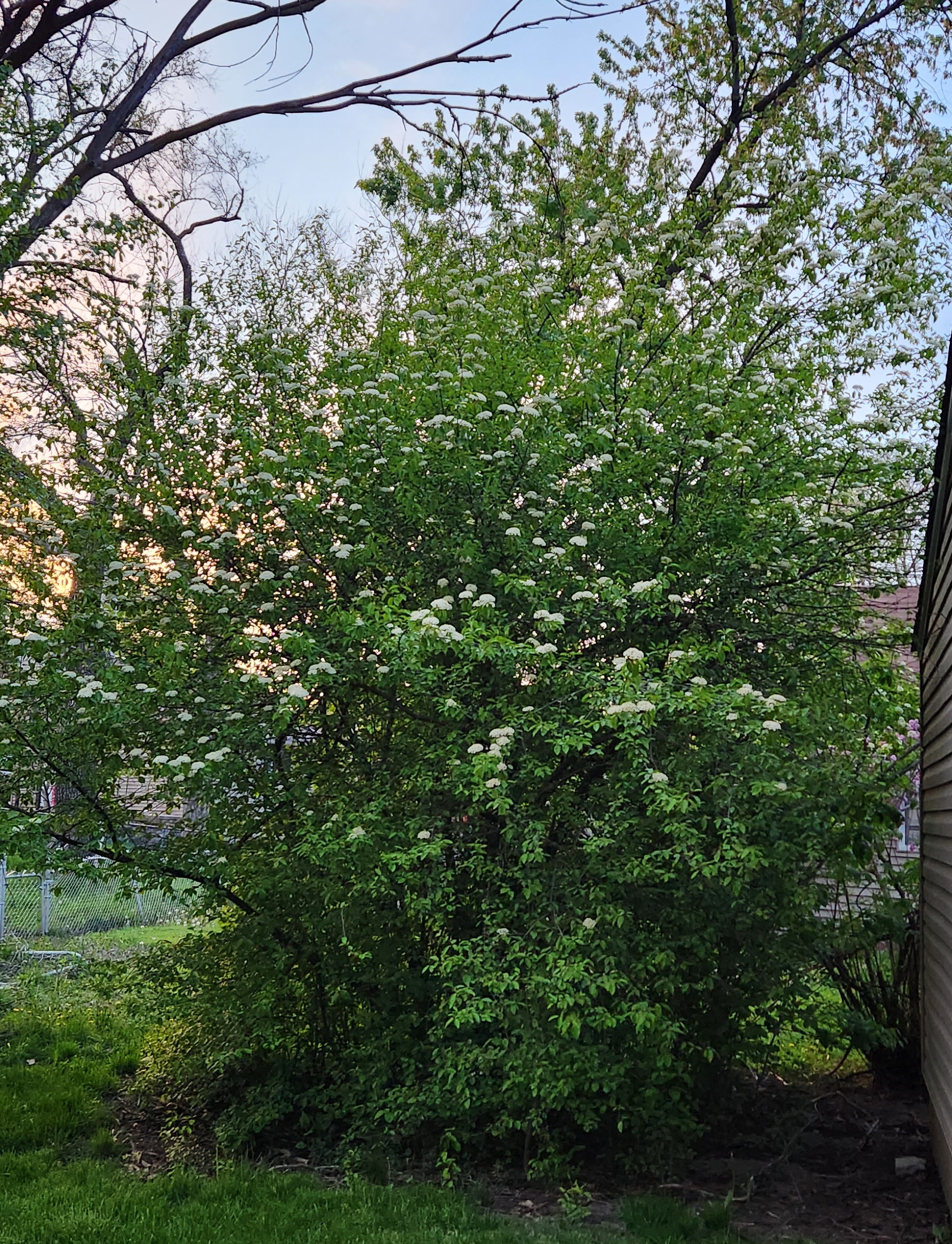
There are a few options for native varieties of shrubs and small trees that can be planted to replace buckthorn once it has been removed. For a natural screen, viburnums or dogwoods can be planted closer together to provide a dense summer buffer. Black-haw and nannyberry viburnum are often selected for this purpose in shaded areas, and red-osier or blue-fruited dogwood will do well in sunny areas.
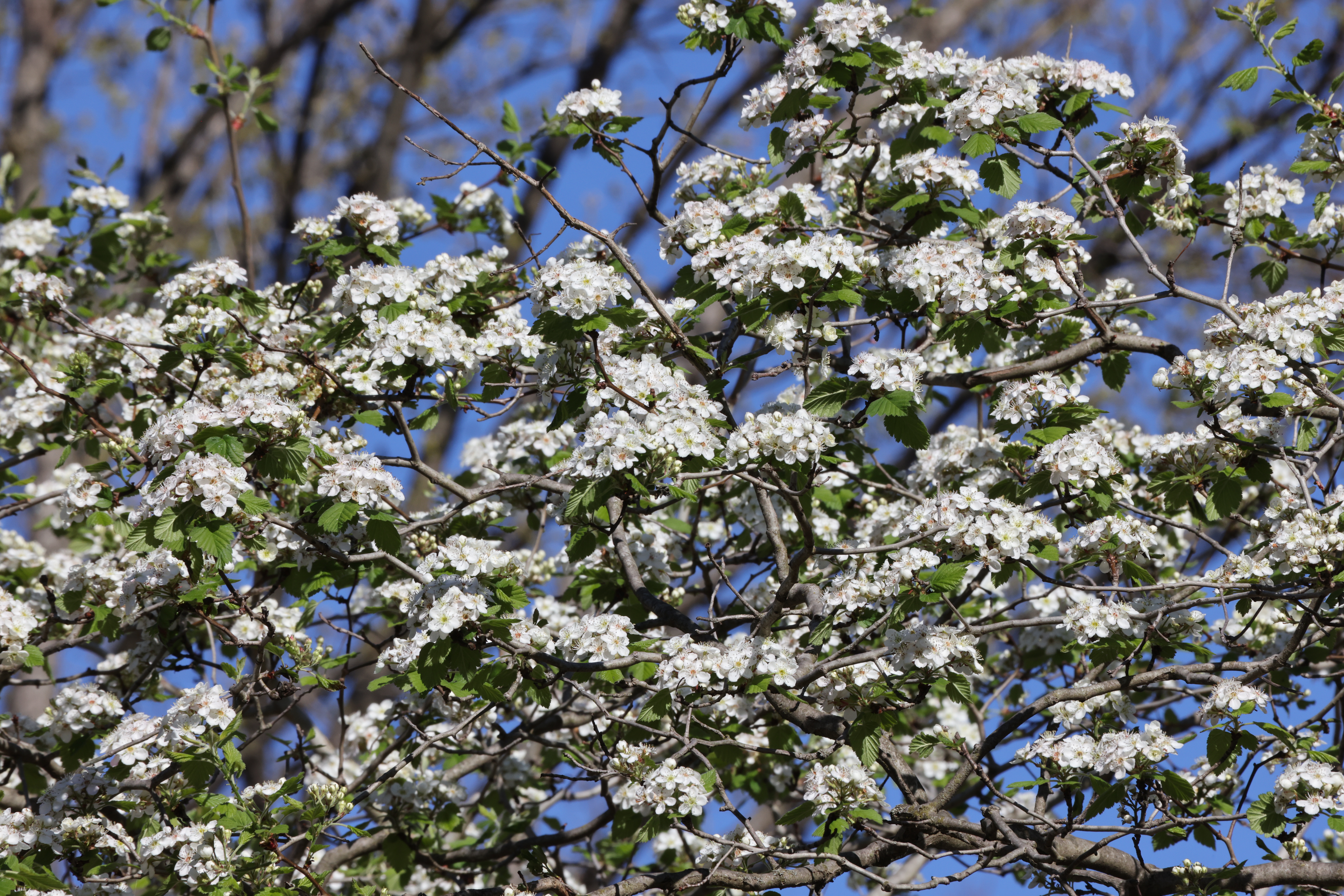
If you are looking for a more tree-like option, native hawthorns have beautiful flowers and do well in sunny locations. Ironwood and musclewood are wonderful smaller trees that do well in open wooded areas.
All of the native varieties of these trees and shrubs will provide food and shelter for a large variety of birds, butterflies, and moths, which is something that common buckthorn cannot do.
Downy hawthorne (Crataegus mollis) flowers in the early spring. Photo by Mark Micek.
Dense foliage and white flowers of a blackhaw viburnum (Viburnum prunifolium) in spring. Photo by Mark Micek.