Parking lots, planted medians, local parks, lining streets, and around homes and businesses are all places where decorative Callery or Bradford pear trees have been planted. It’s easy to understand why they were so commonly used as they can tolerate harsh conditions and put on a beautiful although stinky display of white flowers in the spring. Unfortunately this decorative tree was not content with just staying where it was planted and it quickly escaped into natural areas where it grows rapidly and displaces the native vegetation while providing little to no benefit to the local wildlife.
What Is Callery Pear?
Callery pear (Pyrus calleryana) is a medium sized tree that has become invasive in the Midwest and eastern United States. In the spring this smaller tree blooms with striking small white flowers that have made it attractive to landscapers and homeowners. It also can survive in a variety of soil conditions. While this makes it an easy choice to plant it is also what enabled the tree to become so invasive in the United States. It is now commonly found in places where it has not been planted. For example, it can be found in roadside ditches, empty fields, disturbed ground, and fence rows where it out-competes smaller native trees and shrubs.
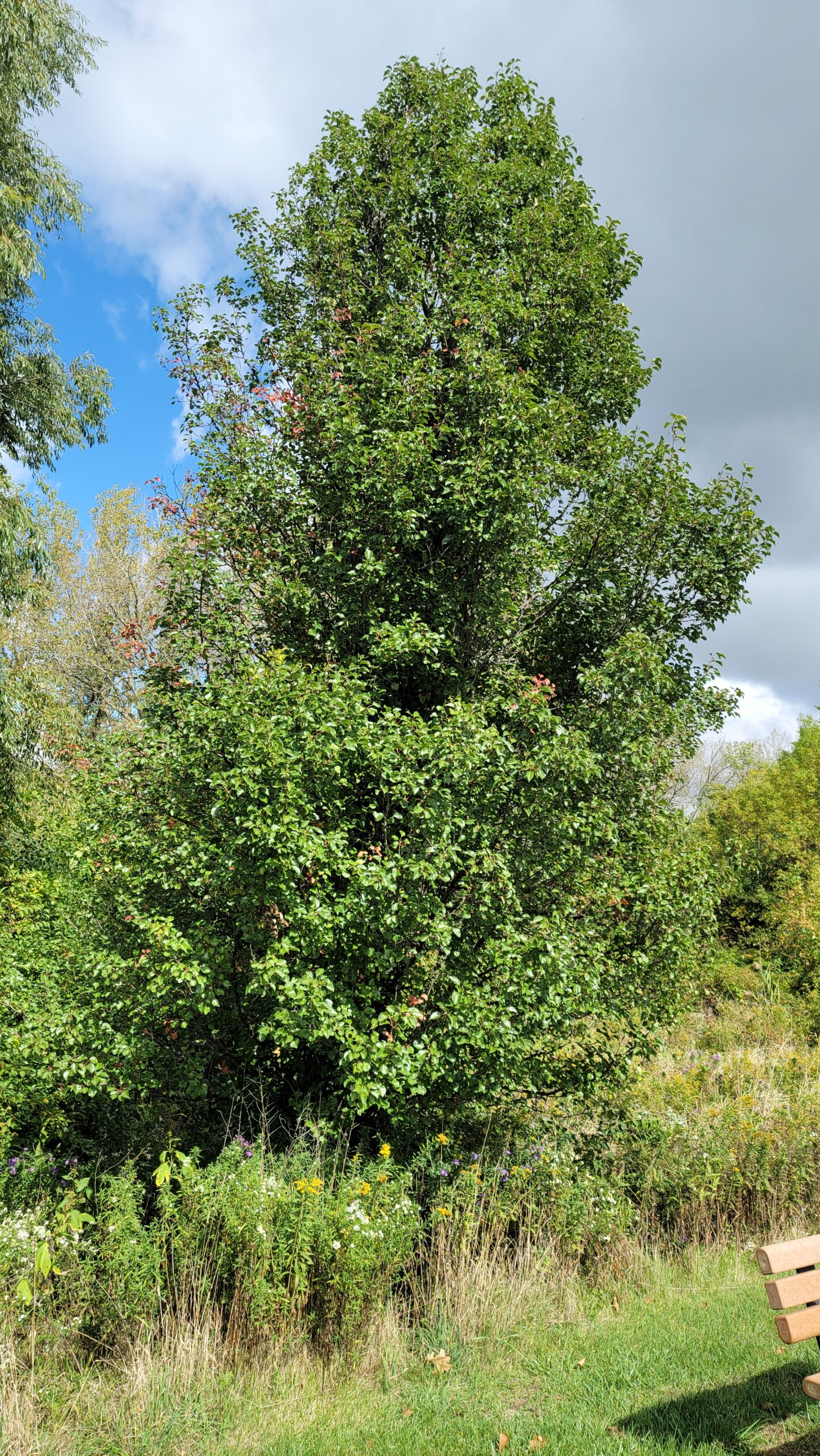
The shape and structure in summer of a Pyrus calleryana, the Callery pear. Photo by Mark Micek.
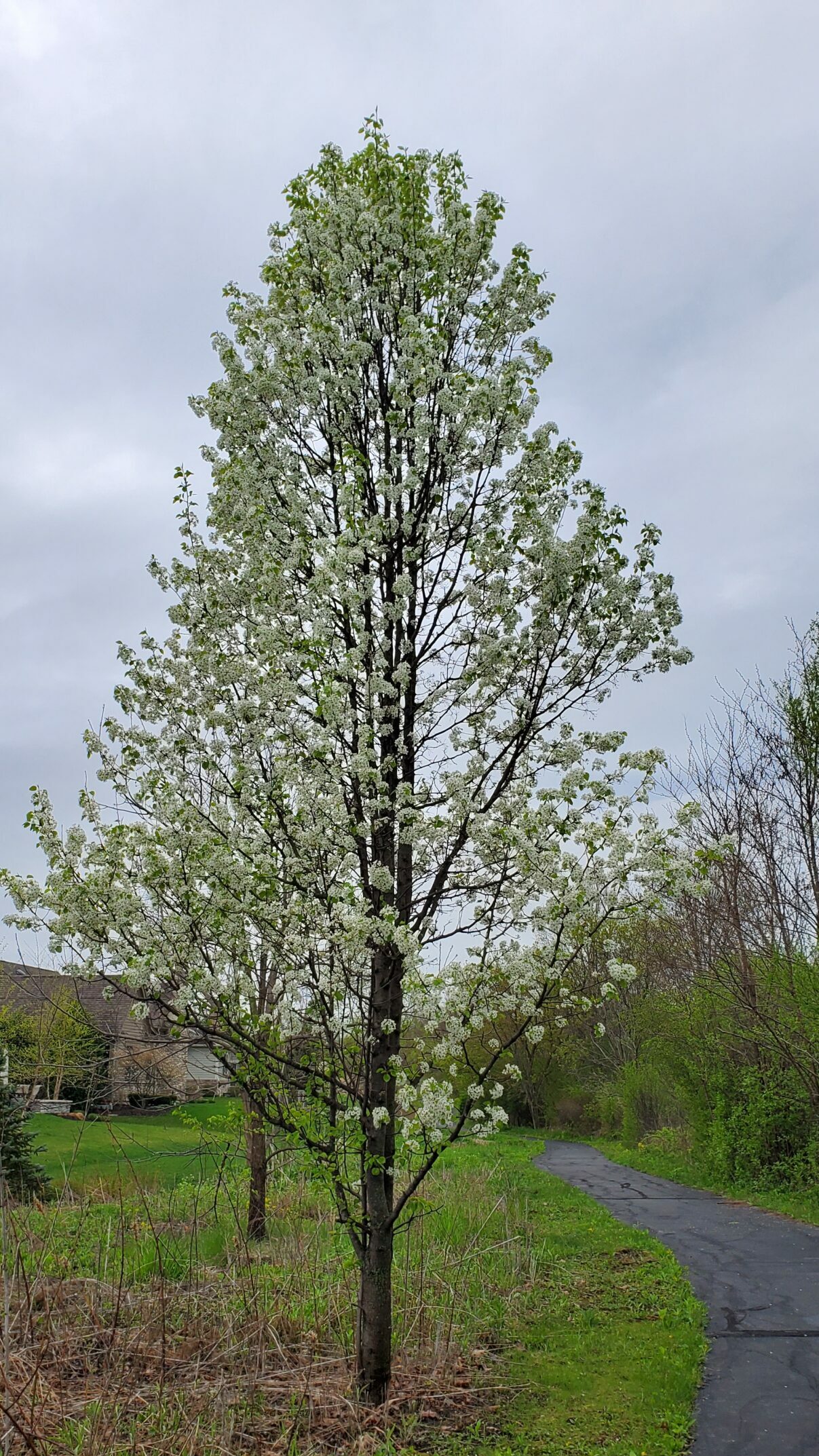
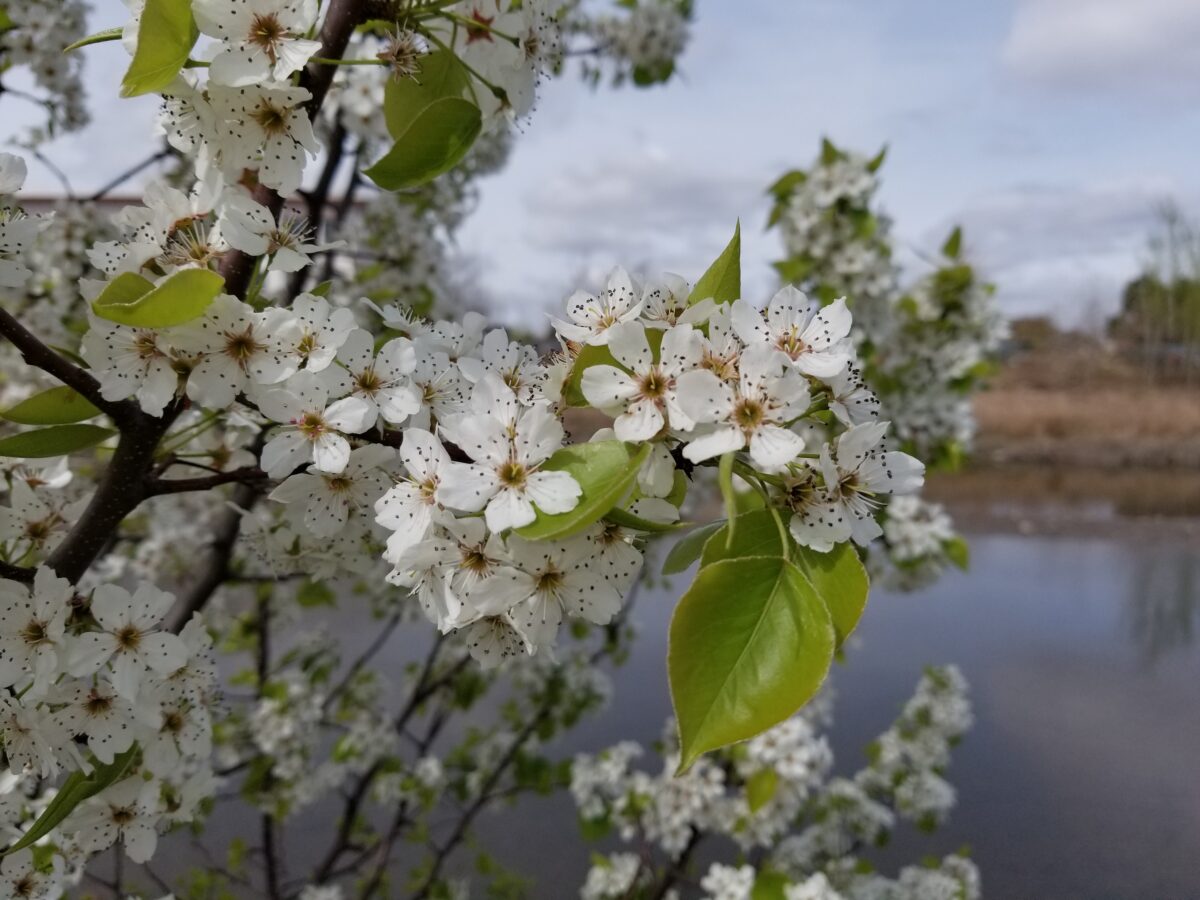
The shape and floral display of Pyrus calleryana, the Callery pear in spring. Photo by Mark Micek.
Where Did It Come From?
Callery pear is native to eastern Asia and was brought over to the U.S. initially in the 1910s to help combat a blight ravaging the common pear. Then in the 1950s it gained traction as an ornamental tree and there are now around 20 cultivars with Bradford being the most popular.
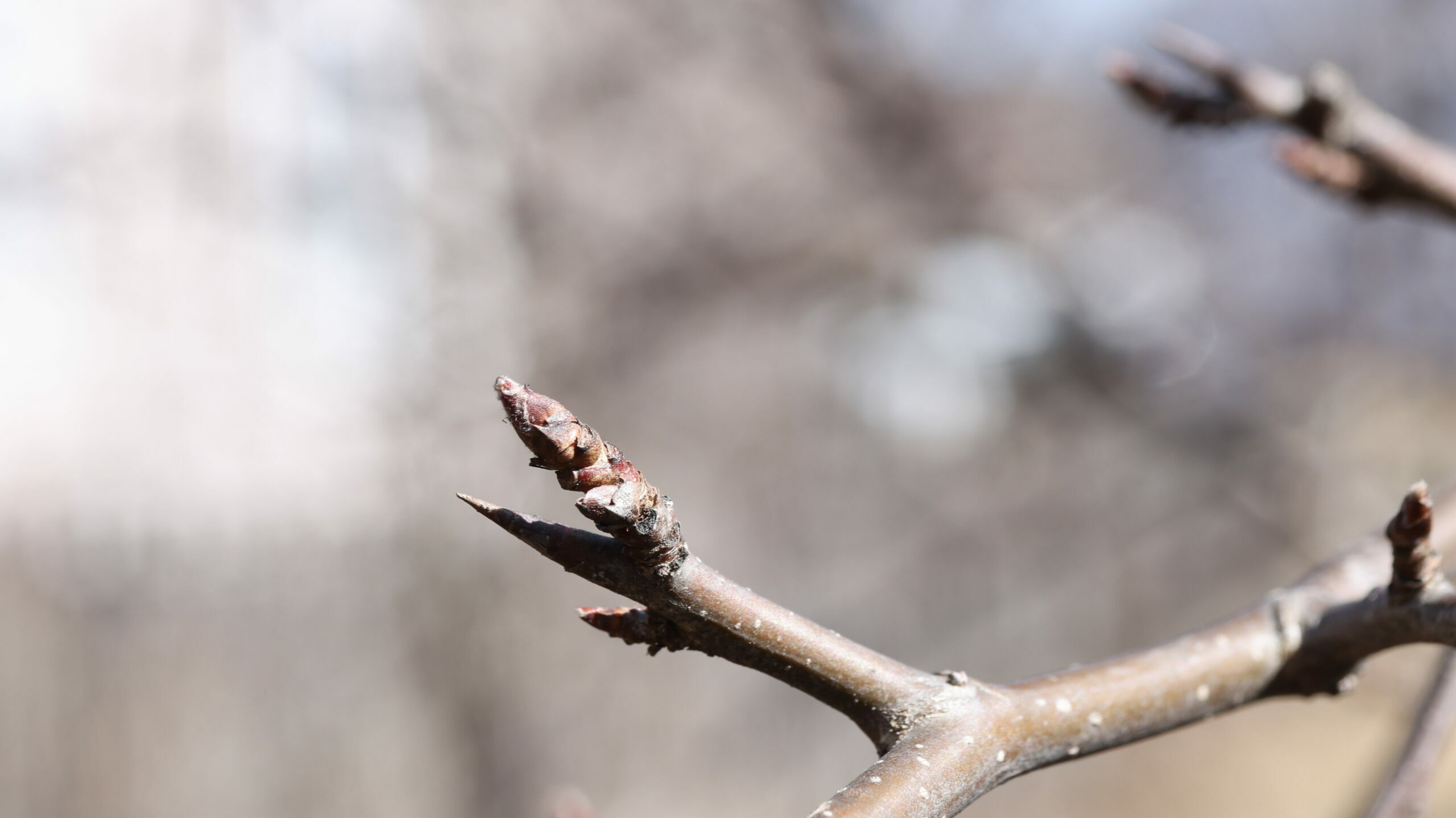
The buds, twigs, and terminal thorn of Pyrus calleryana, the Callery pear. Photo by Mark Micek.
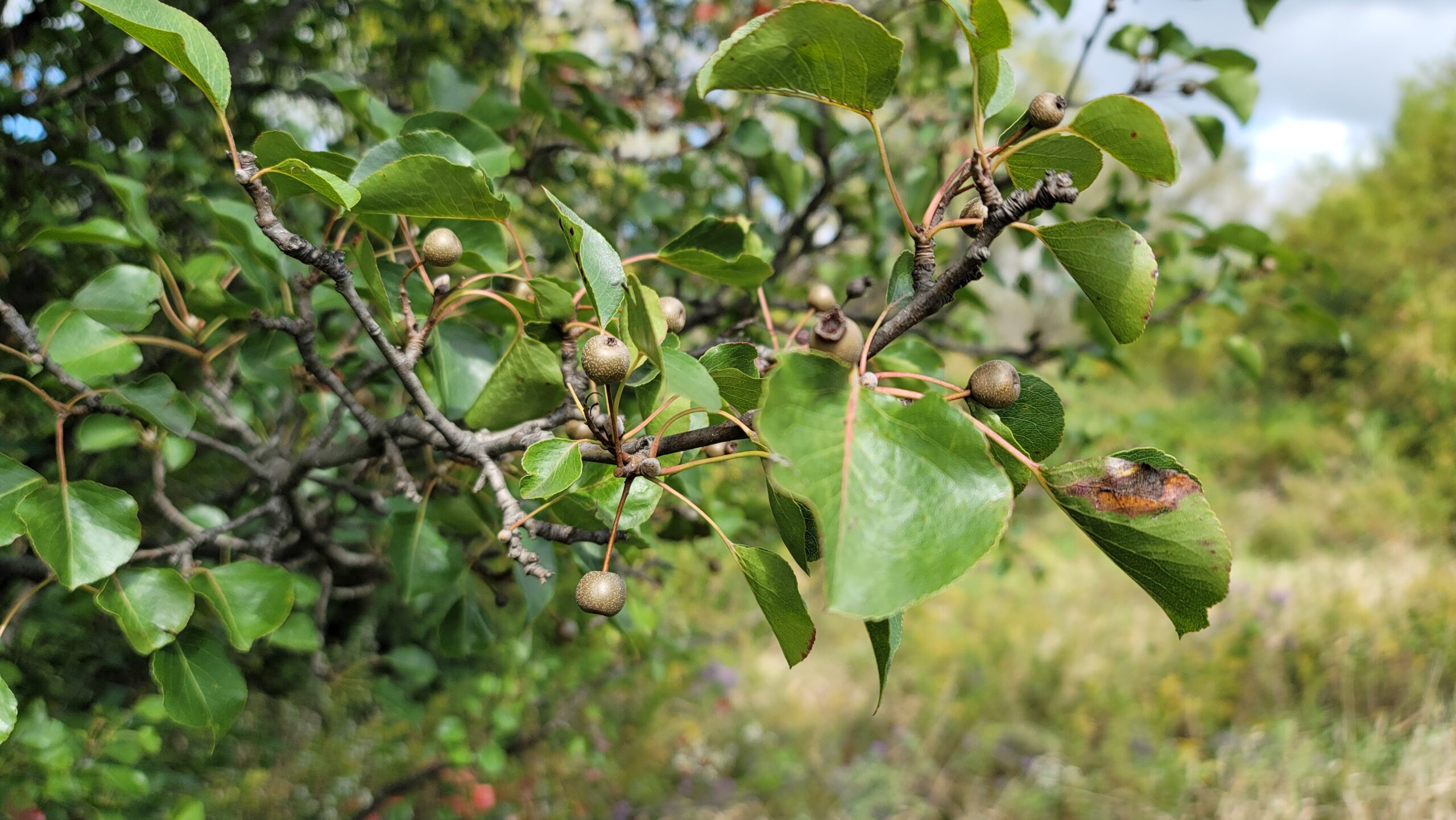
The fruit and leaves in summer of Pyrus calleryana, the Callery pear. Photo by Mark Micek.
What Is Its Life Cycle?
This tree grows fast and tops out around thirty-five feet. They also grow very straight and uniformly and while this makes them very attractive trees it also makes them very fragile. When mature, they can often break under their own weight during strong winds. The Callery pear is also very beautiful in the spring with its vibrant white flowers, but the downside is they smell horrible during this time*. While the smell is negative, its leaves give it some positive points. They are glossy and, in the fall, they turn a vibrant red color.
For being a pear tree, the Callery pear fruits do not resemble the classic pear shape. They are small cherry shaped fruits and originally, they were bred to be sterile, but with the introduction of cultivars the fruits began to be viable. After this, as mentioned before, the same things that made it so attractive to plant are what have enabled it to become so invasive. It is resistant to pollution and drought and can tolerate a variety of soils.
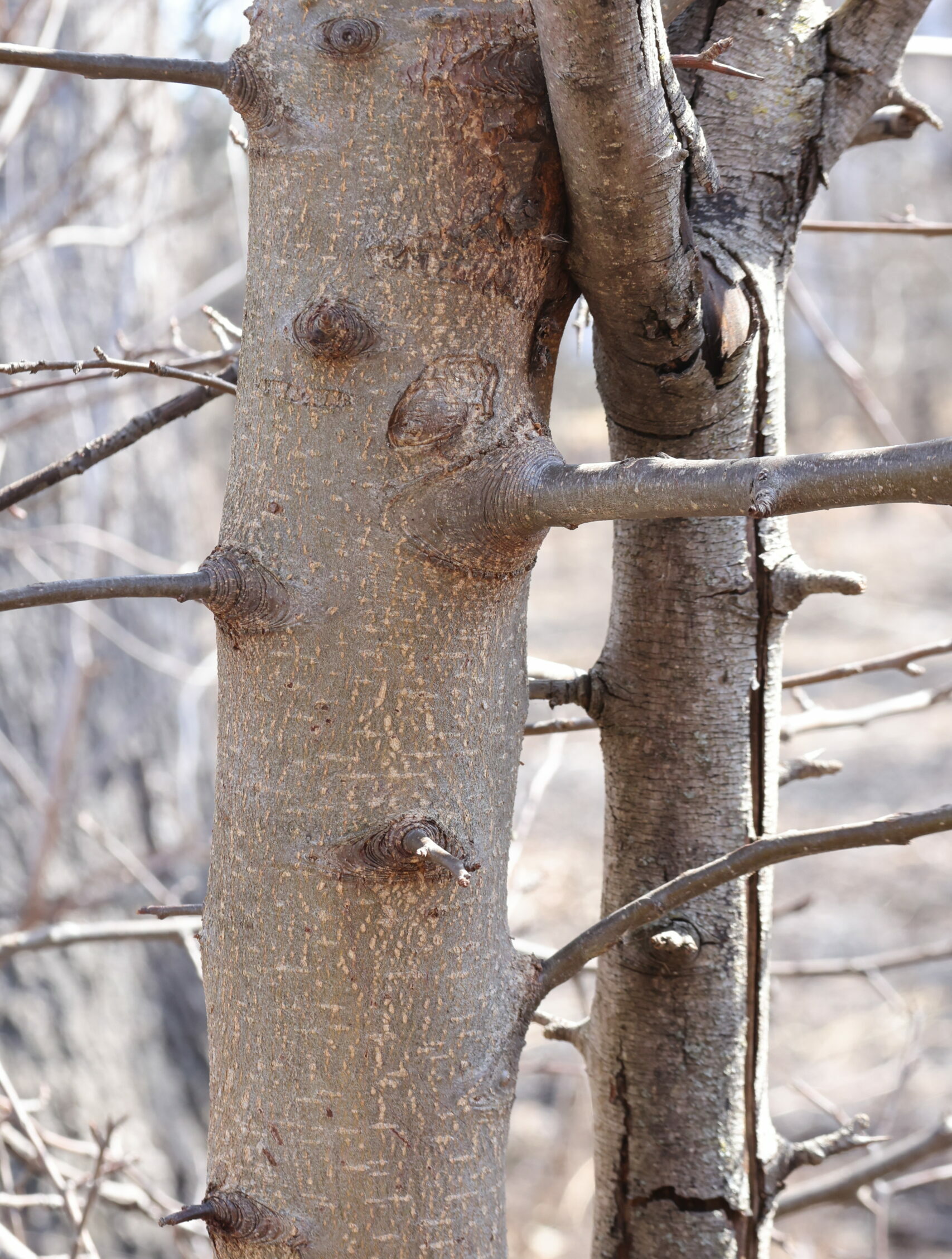
The bark in winter of a Pyrus calleryana, the Callery pear. Photo by Mark Micek.
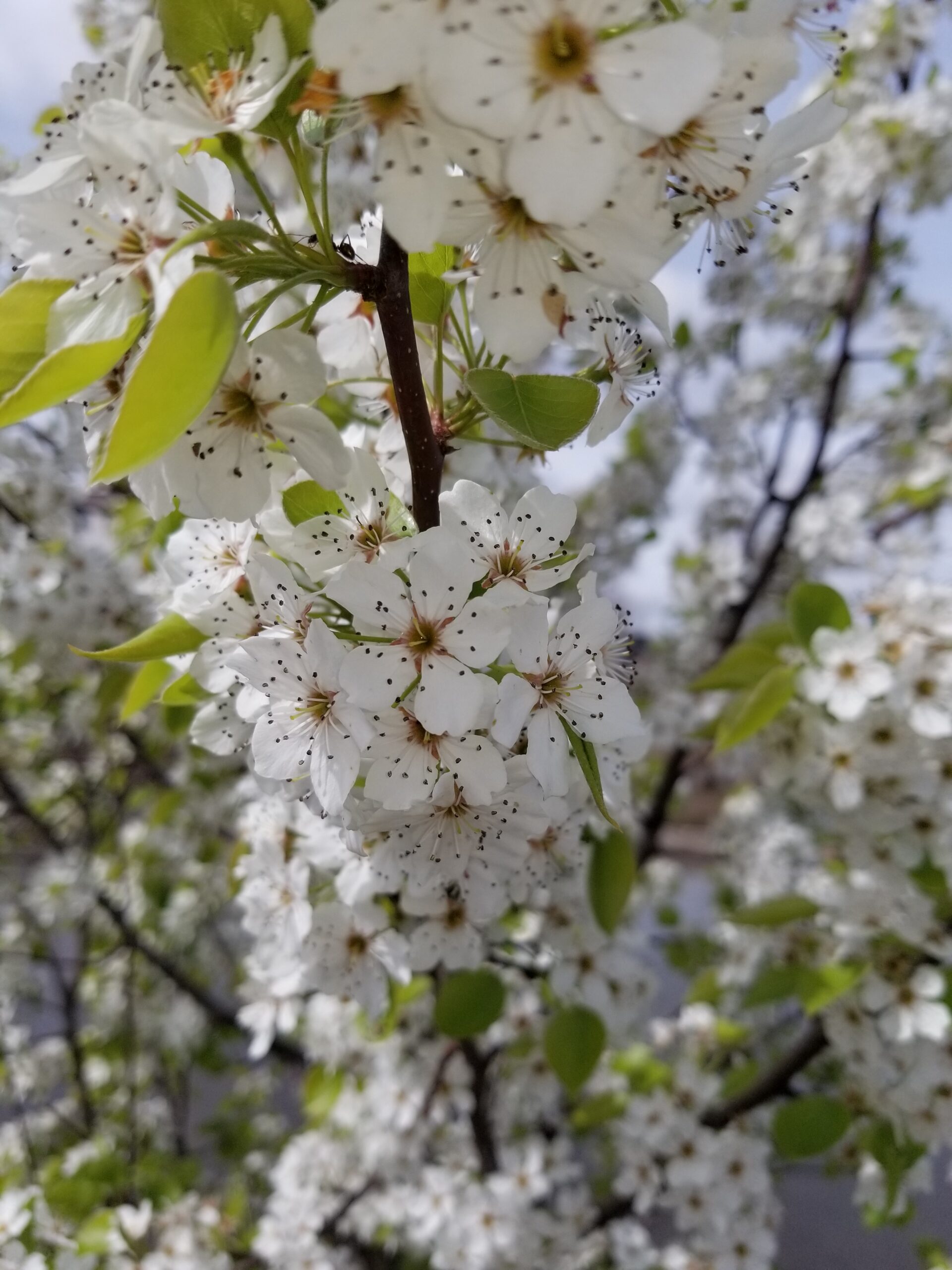
View of the white flowers of Pyrus calleryana, the Callery pear in the spring. Photo by Mark Micek.
How Can You Control It?
This invasive tree can be controlled in two ways, by preventing its sale and installation and by removing the existing trees that have already been planted. Many states are working to prevent further installations by banning its sale. While Illinois does have a full ban on the sale, distribution, and planting of Callery pear, WI has yet to take any legislative action.
Smaller trees can be foliar treated carefully with an appropriate herbicide, but larger individuals should be cut down and the stumps treated with an appropriate herbicide to prevent resprouting.
Please follow the labels of any herbicide used and wear the appropriate PPE while using any chemical.
What Can You Plant Instead?
While easy to establish, the Callery pear has many downsides and there are several alternatives you can plant instead.
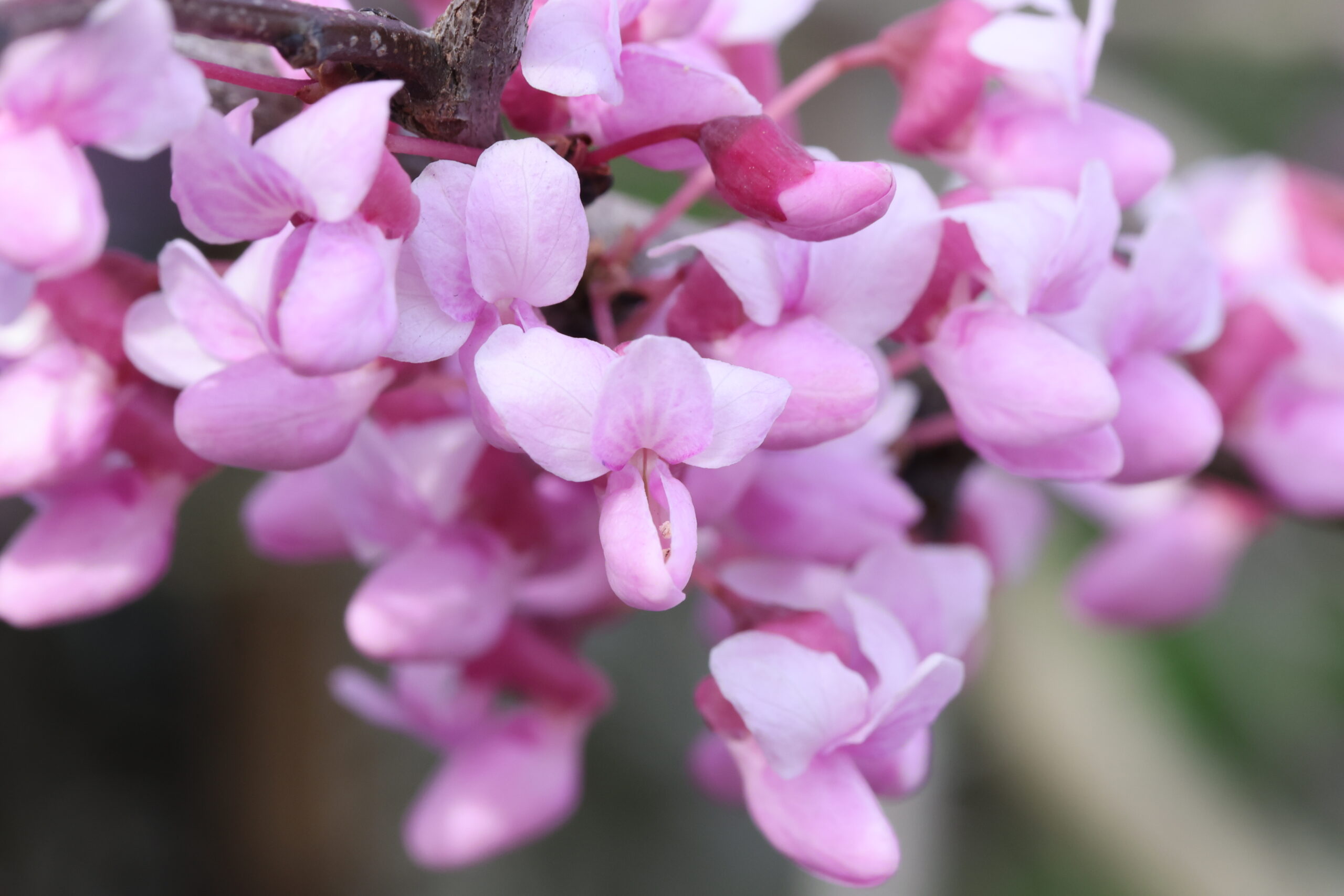
The redbud (Cercis canadensis) is a native shrub that produces beautiful flowers in the spring and has attractive heart shaped leaves. While it doesn’t grow as tall or as uniform as the Callery pear, it does have around the same lifespan and can tolerate a variety of soil conditions.
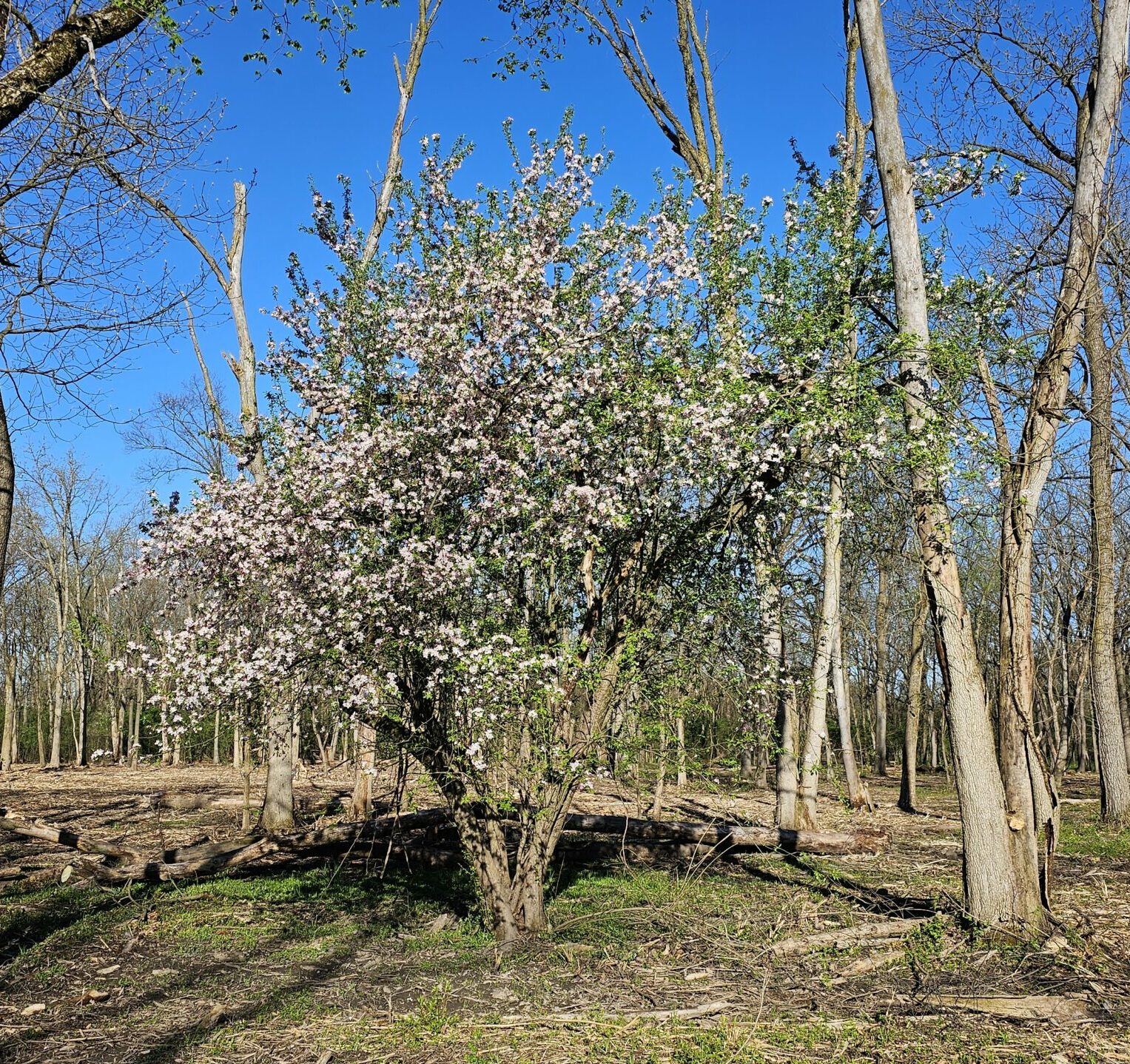
Another alternative is the prairie crab apple (Malus ioensis). This small treetops out at 25 feet and has gorgeous pink blooms in the spring. It has similar fruits to the Callery pear and tolerates a variety of soil conditions as well. It is rarer due to habitat loss so planting one will bolster its population and attract many native pollinators.
*Fun fact: most plants pollinated mainly by flies usually smell pretty bad to attract them, so this is a contributing factor to the tree’s unpleasant smell.
The pink flowers of a redbud (Cercis canadensis) in the spring. Photo by Mark Micek.
The prairie crabapple, Malus ioensis with pink blooming flowers in the spring. Photo by Mark Micek.