Most of our invasive, non-native weeds can be quite aggressive, but few seem to be able to thrive in the variety of conditions that Japanese knotweed can tolerate. While it may prefer to be in a sunny area with moist soils, it seems to do just fine in dense woodlands, dry prairies, and even in the dark crawlspaces under homes. Luckily, with proper identification, and careful management it can be removed so more desirable vegetation can thrive.
What Is Japanese Knotweed?
Japanese knotweed is an invasive perennial plant with an aggressive root system that can grow in a variety of conditions. While it prefers more sunny areas and occasionally moist soils it can grow in heavily shaded and dry areas. Larger stands have been found spreading into cellars and under house crawl spaces through cracks in the foundations. It is considered an extremely aggressive plant, and steps should be taken to control it if found on your property.
When looking this plant up online you may notice it has a few different botanical names. While Reynoutria japonica is the current preferred nomenclature, it has also been known as Polygonum reynoutria, Polygonatum cuspidatum, and Falopia japonica.
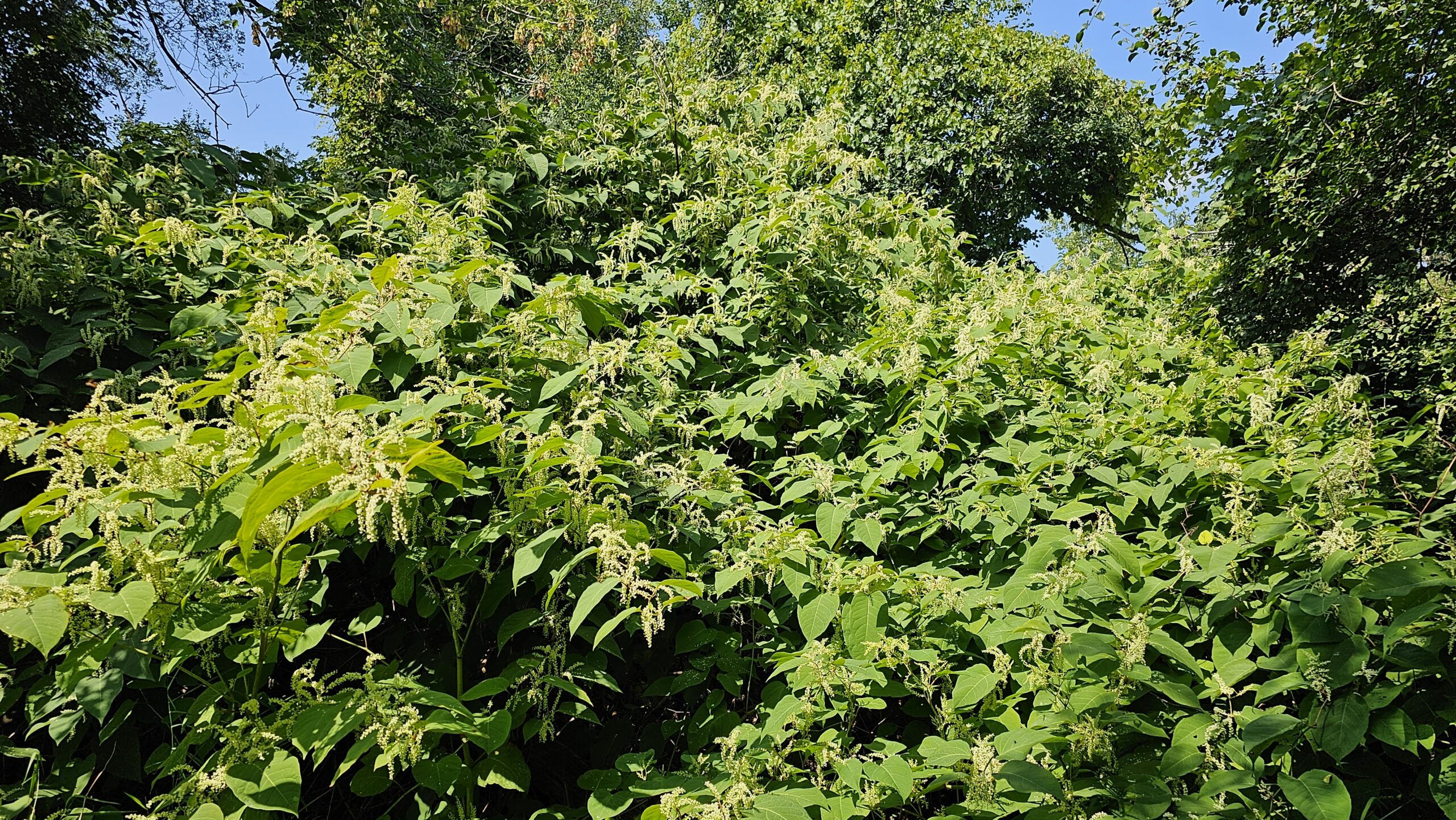
Dense stand of Japanese knotweed (Reynoutria japonica) in full sun. Photo by Mark Micek.
Where Did It Come From?
As the name might suggest, this plant originates from eastern Asia. Like so many other plants invasive to the United States, it was brought over here in the 1800’s to be used as a landscape plant. With its aggressive nature, it quickly escaped cultivation and has spread throughout most of North America.
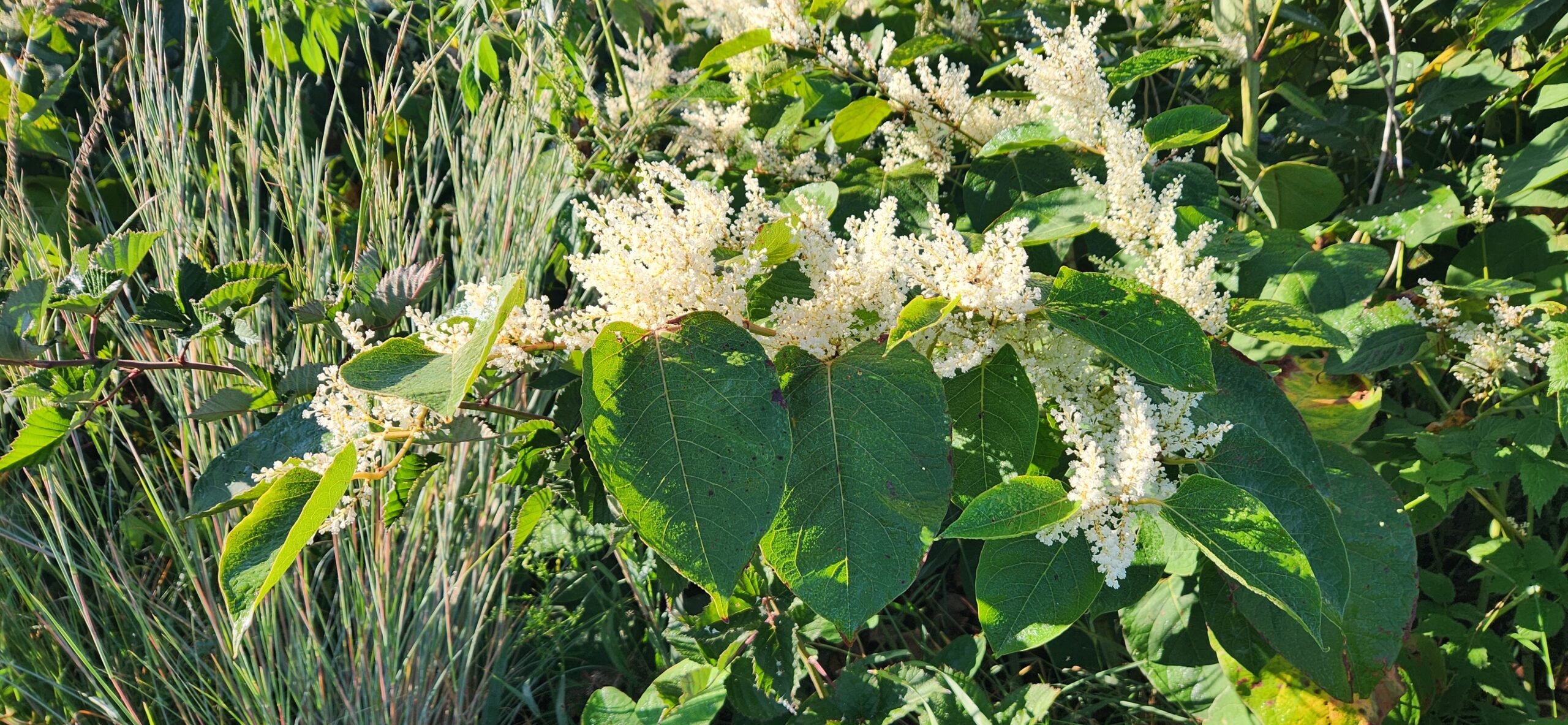
Japanese knotweed (Reynoutria japonica) in bloom. Photo by Mark Micek.
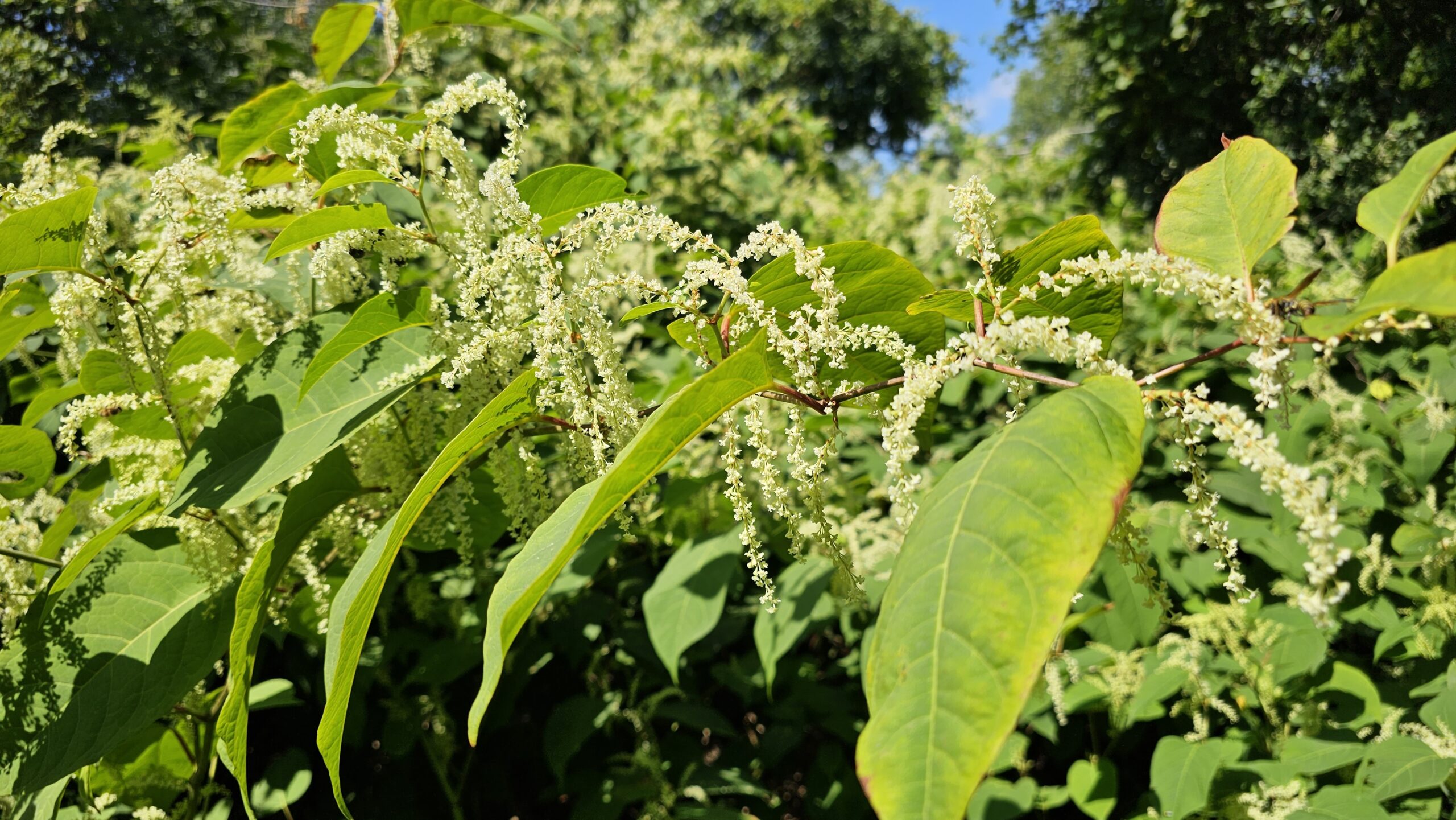
Flowers and leaves along a branch of Japanese knotweed (Reynoutria japonica). Photo by Mark Micek.
What Is Its Life Cycle?
Japanese knotweed can spread in two ways. New solitary plants come from seeds that were spread from parent plants. Those new plants over time will then send out aggressive lateral roots that will send up new shoots, and a colony of plants will begin to form. This method of spreading is called rhizomatous growth. This means that often when you see a stand of Japanese knotweed, you may actually be looking at just one plant connected by an extensive underground root system.
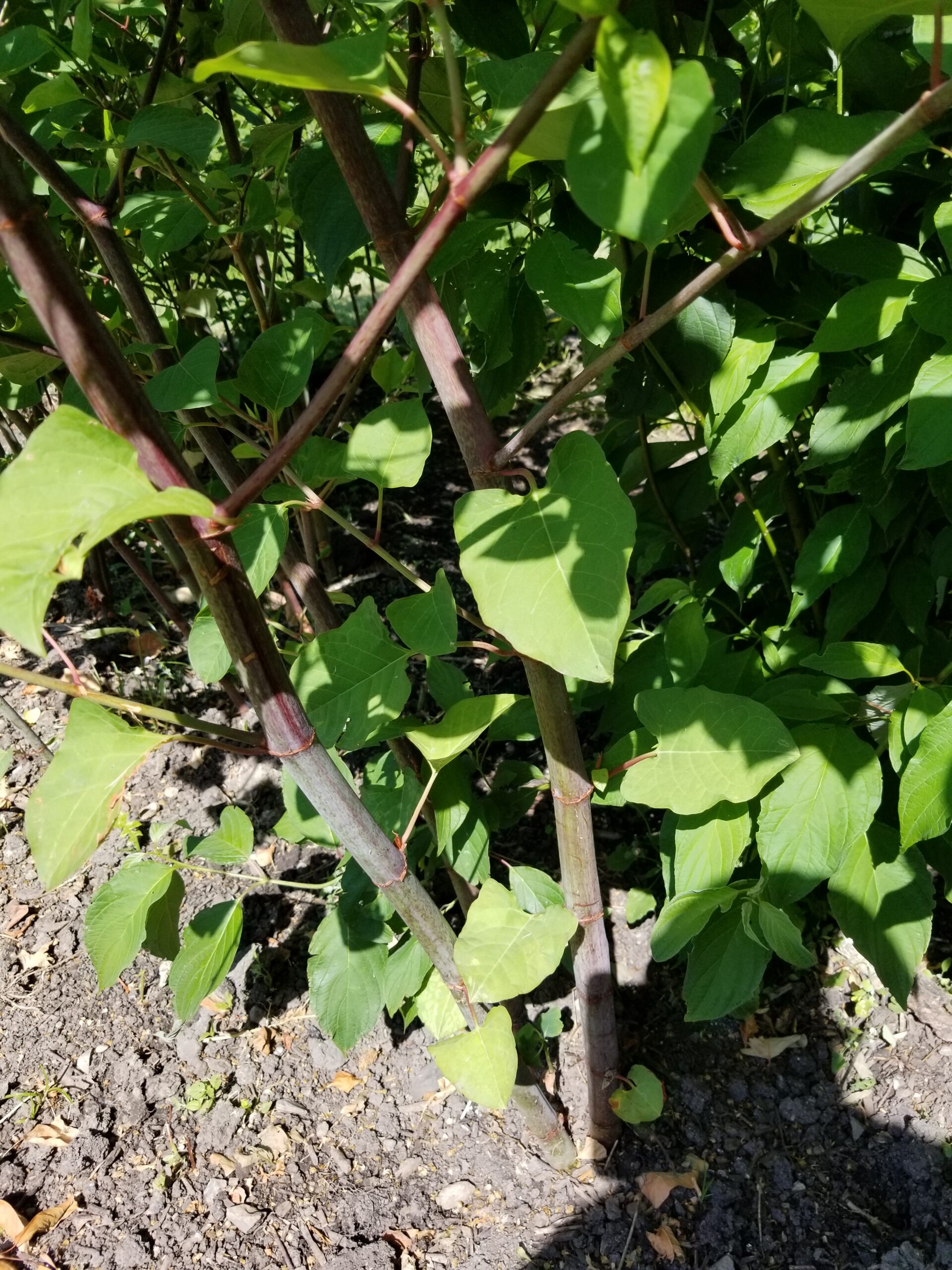
While not a true woody plant because the stems die back each winter, the stems are very rigid, almost bamboo-like. The stems themselves usually have a blueish green tint, often with red spots. When cut back you can see that the stems are mostly hollow.
The leaves are located alternately along the stem and are often nearly round or slightly ovate. It blooms in the late summer, often lasting into early fall with small white flowers arranged in panicles that emanate from the axillary buds (where the leaf meets the stem).
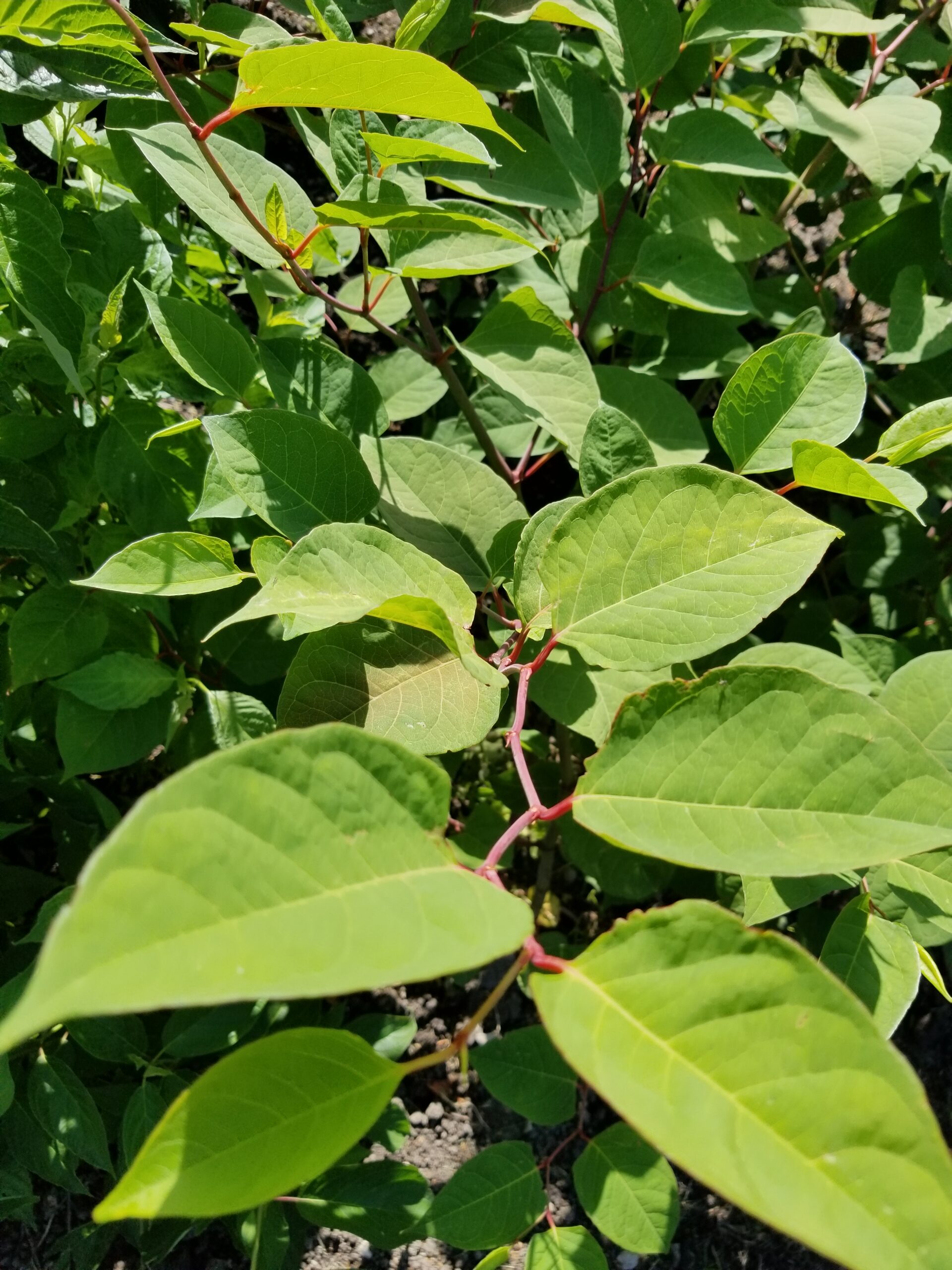
Stem with alternating leaf pattern of Japanese knotweed (Reynoutria japonica). Photo by Mark Micek.
Green and purple bamboo-like stems of Japanese knotweed (Reynoutria japonica). Photo by Mark Micek.
How Can You Control It?
When trying to control Japanese knotweed, eliminating the root system is generally the biggest challenge. While pulling and of plants can be successful for smaller colonies, it can take several seasons to achieve ultimate control as fragments of roots left behind can resprout. Additionally, you must be careful when disposing of the material you remove so that you don’t spread it around unintentionally.
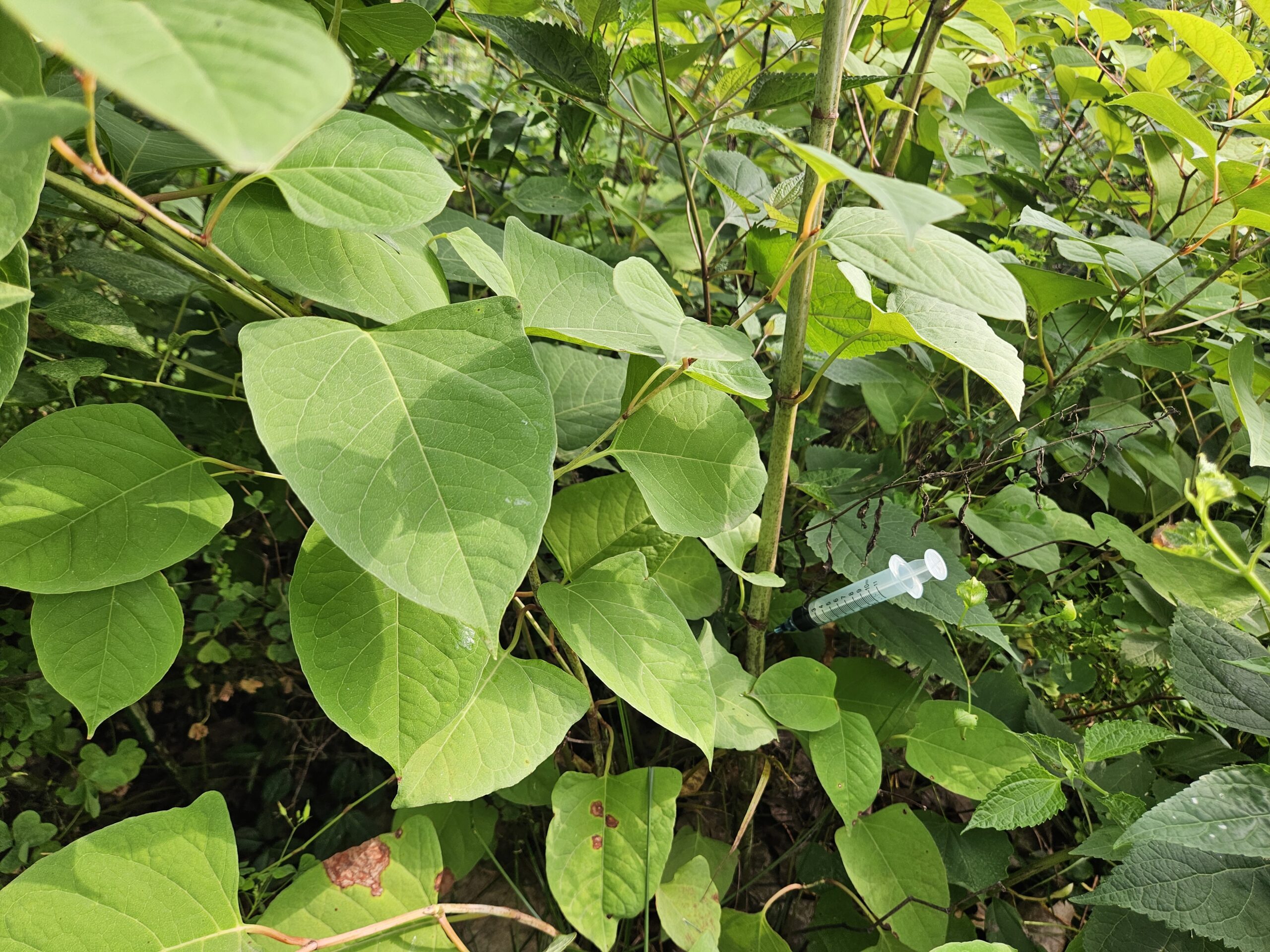
Chemical control is often the most efficient method of eradication. Foliar applications of broadleaf or non-selective herbicides can be effective, but more than one application is often needed to fully kill the extensive root system. For control work in sensitive areas, some herbicides can be applied via an injection directly into the stem with a syringe.
When working with any herbicides, exercise caution by wearing all recommended personal protective equipment and following the directions on the labels.
Due to its extensive roots, prescribed burning does not do much to actively control this weed. No matter what method of control you try, you will likely be fighting this plant for several growing seasons.
Injection method with syringe to control Japanese knotweed (Reynoutria japonica). Photo by Mike Polito.
What Can You Plant Instead?
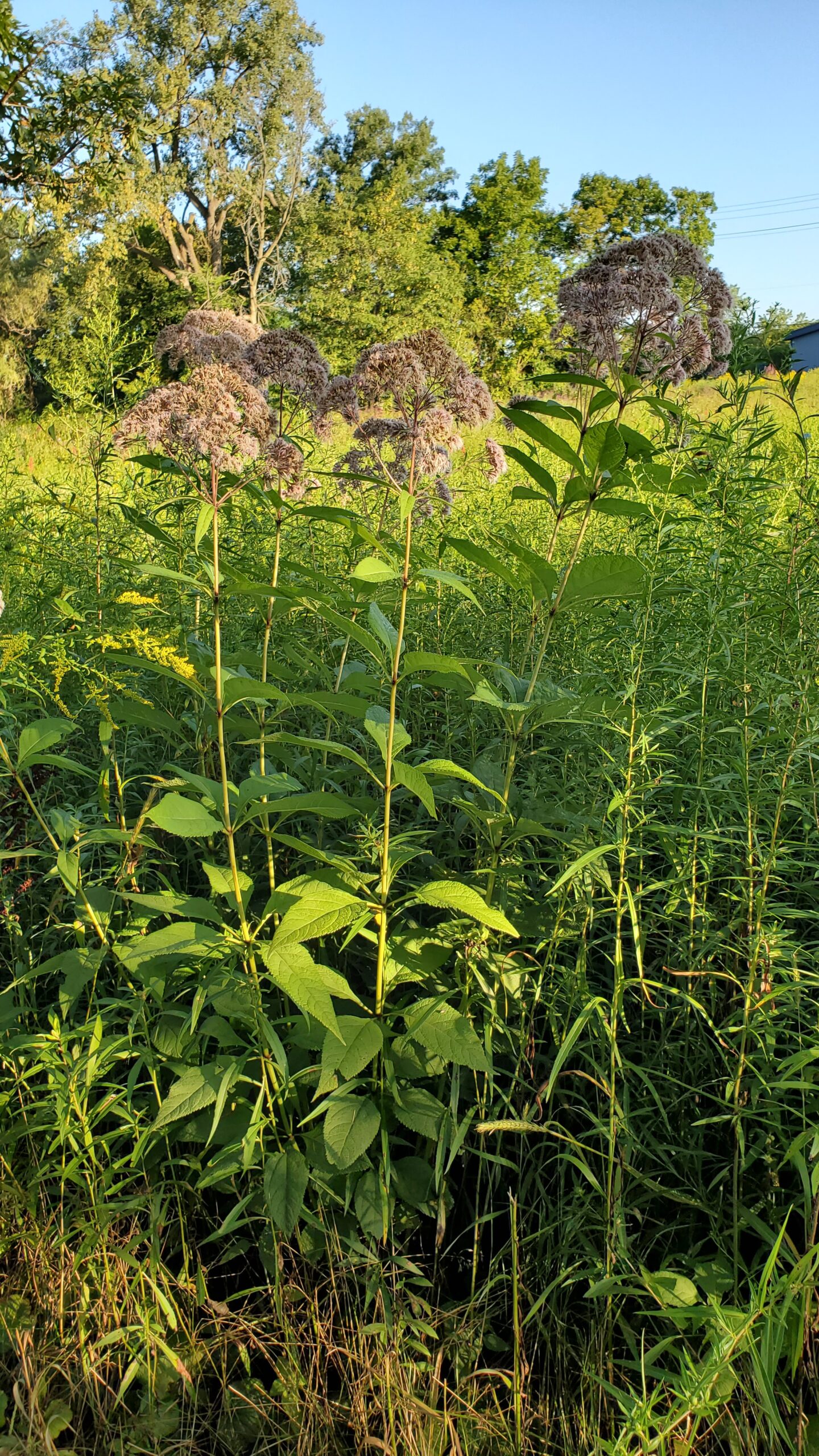
There aren’t many readily available herbaceous plants that are native to this area that have a similar look to Japanese knotweed. The native joe pye weed (Eutrochium purpureum) is a later blooming perennial with beautiful pink/purple flowers and larger leaves that do well in partial shade and a variety of soil moisture conditions.
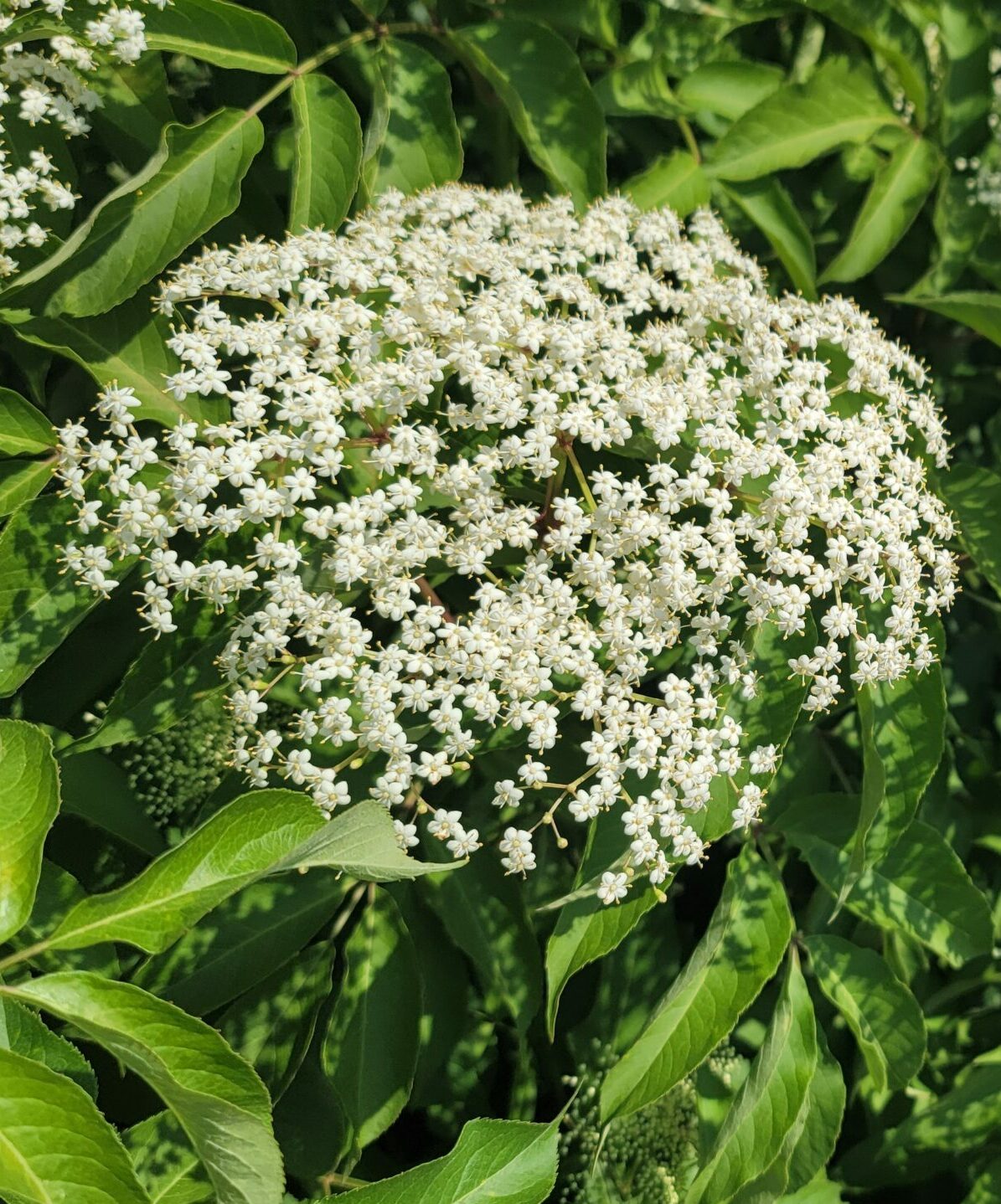
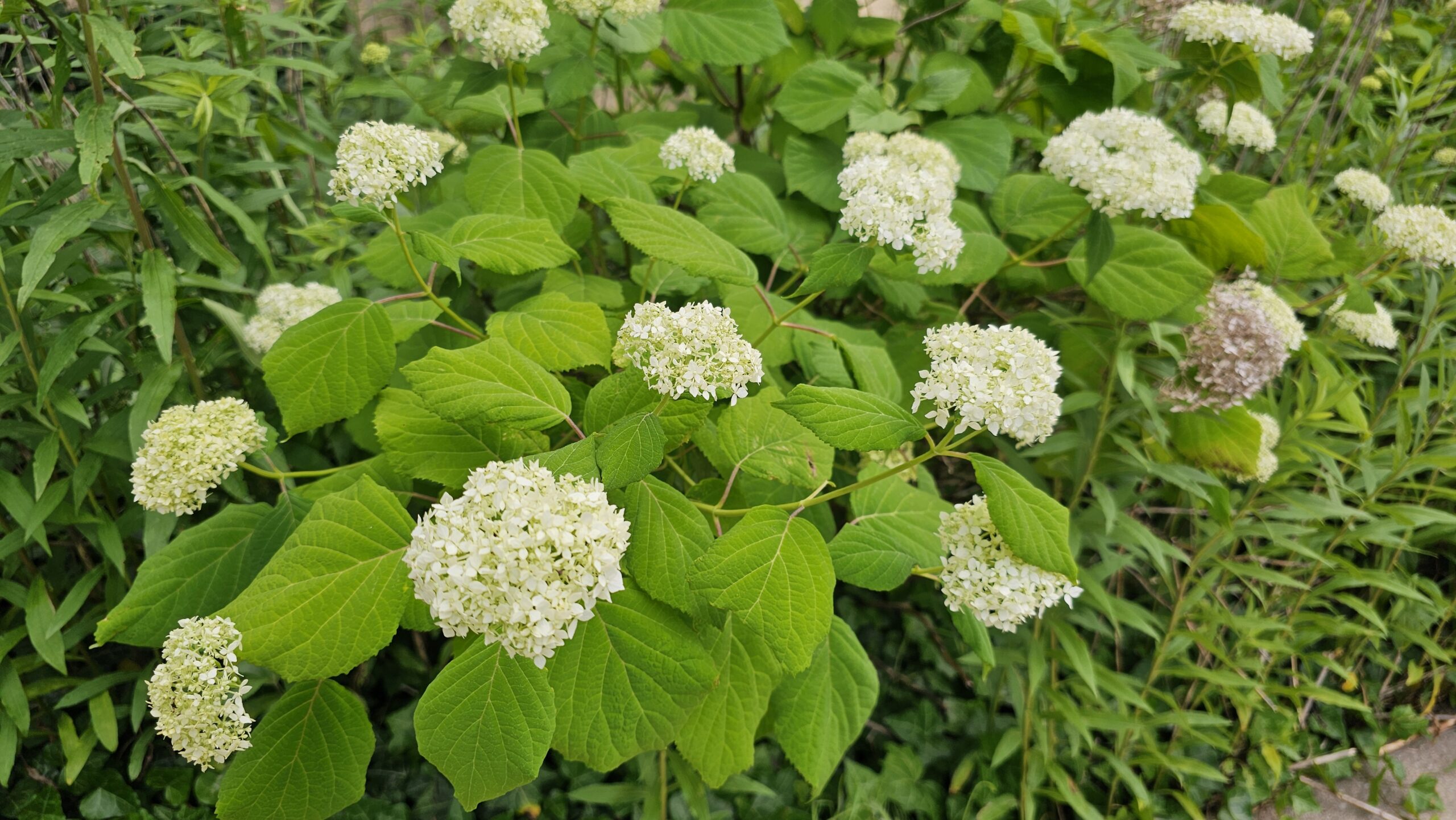
For woody options, hydrangeas can have a similar shape and leaf structure. Smooth hydrangea (Hydrangea arborescens), is often available from local nurseries and grows well in the Great Lakes region. The pagoda dogwood (Cornus alternifolia) can be a bit tricky to get established, but when it does it will have a beautiful branching structure and be very colorful with white blooms in the spring. Elderberry (Sambucus canadensis) is another native shrub that does well in moist soils and can be aggressive enough to provide a natural hedge.
Joe Pye Weed (Eutrochium purpureum) in bloom in a prairie savanna. Photo by Mark Micek.
Elderberry (Sambucus canadensis) in bloom in a sunny wetland. Photo by Mark Micek.
Smooth hydrangea (Hydrangea arborescens) in bloom in an open savanna Photo by Mark Micek.