Not every invasive weed stands out, but teasel with its marshmallow stuck to a trident appearance is very noticeable. This weed is very easy to spot; it has spread far and wide throughout much of the United States. Even in the winter, its dried-out stalks often remain visible above the snowy landscape. Luckily with proper management, it can be brought under control.
What Is Teasel?
Driving along any highway in the Chicagoland area you can look along the roadsides and there is a high probability that you will see a strange looking tall leafy plant with a spiked cylindrical flower head. This is teasel. There are two species of teasel that are in northeast Illinois, the common teasel and cut-leaf teasel. They are almost indistinguishable but for the color of their flowers and a difference in their leaf shape. No matter the species, it is a highly invasive herbaceous plant that dominates roadsides and is invading our natural spaces.
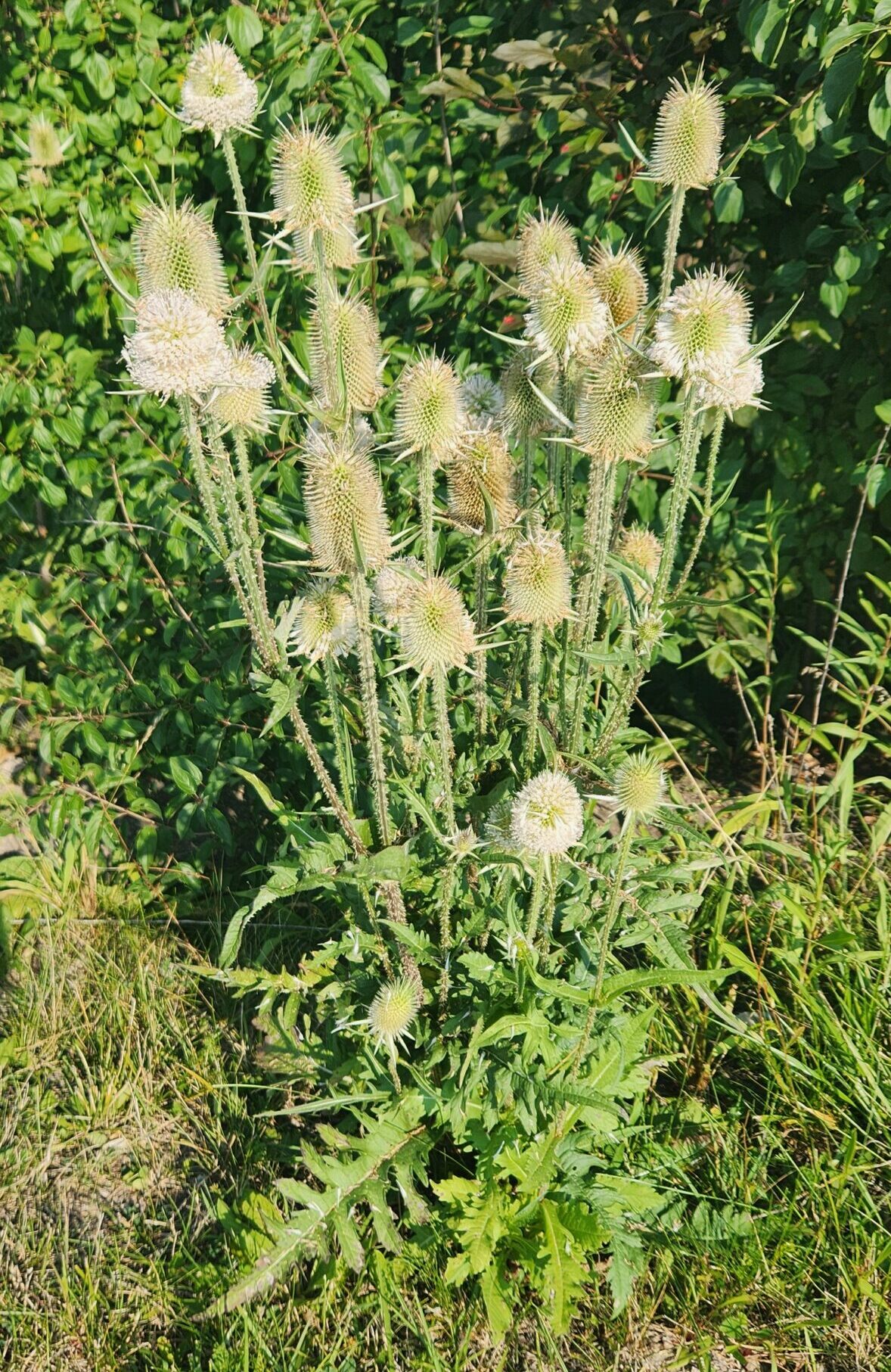
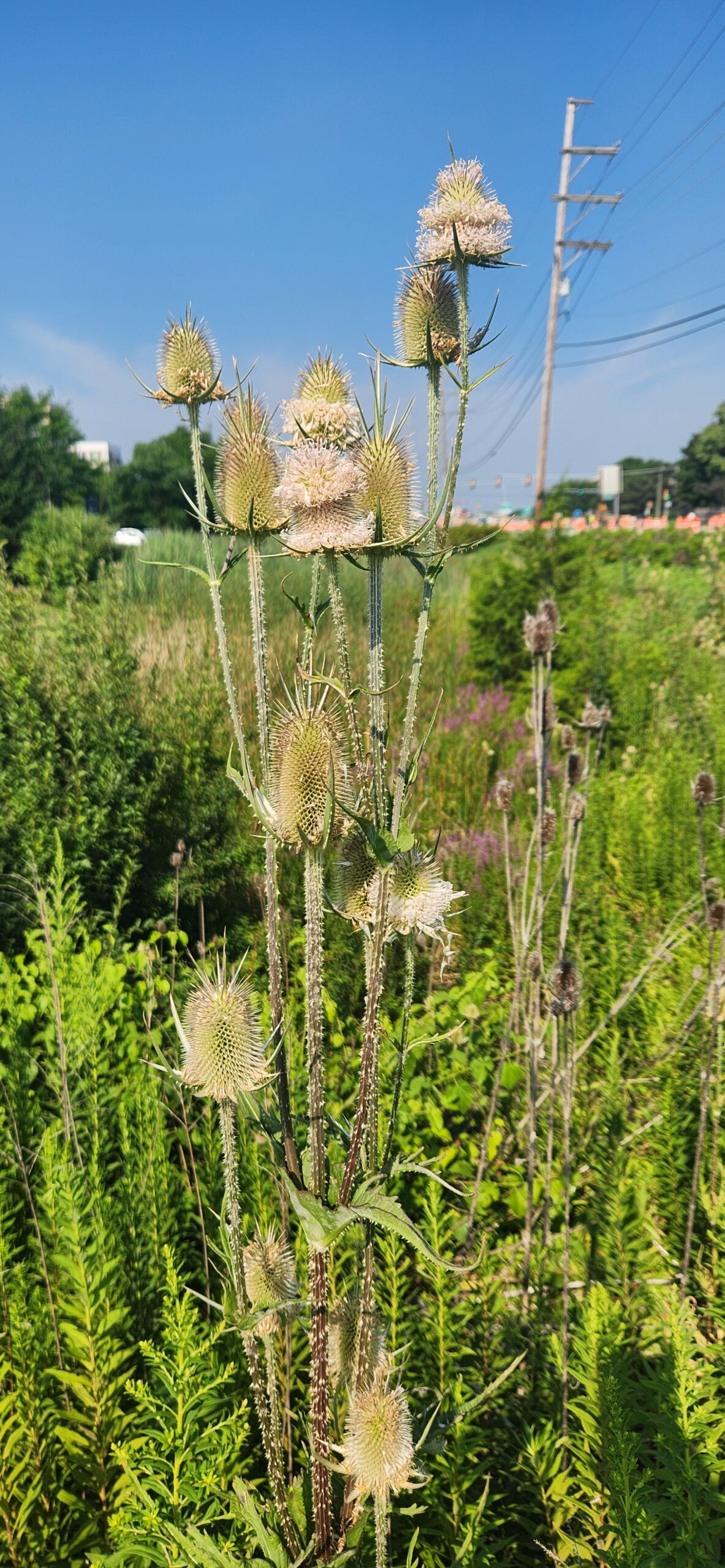
Cut-leaf teasel with it's white blooms, prickly stems and "cut" leaves. Photo by Mark Micek.

Teasel, Dipsacus sp, prickly seed head in winter. Photo by Mark Micek.
Where Did It Come From?
Teasel is native to Europe and parts of Asia and was used for centuries to tease wool into a soft fabric. When dried the sturdy seedheads become a perfect tool to do this task. When Europeans colonized the U.S., they brought this practice with them and cultivated the plant on their homesteads. As the United States industrialized, wool manufacturers needed more and more of the plant so for a time, it became a crop that farmers planted. Since each seedhead contains hundreds of seeds that can become established very easily and those seeds can stay viable for more than one season, it’s no wonder teasel has become such an invader.
To this day this plant is also frequently included in many flower arrangements, dried or otherwise, due to its unique shape. This contributes to its continued spread and why it can also be found in cemeteries.
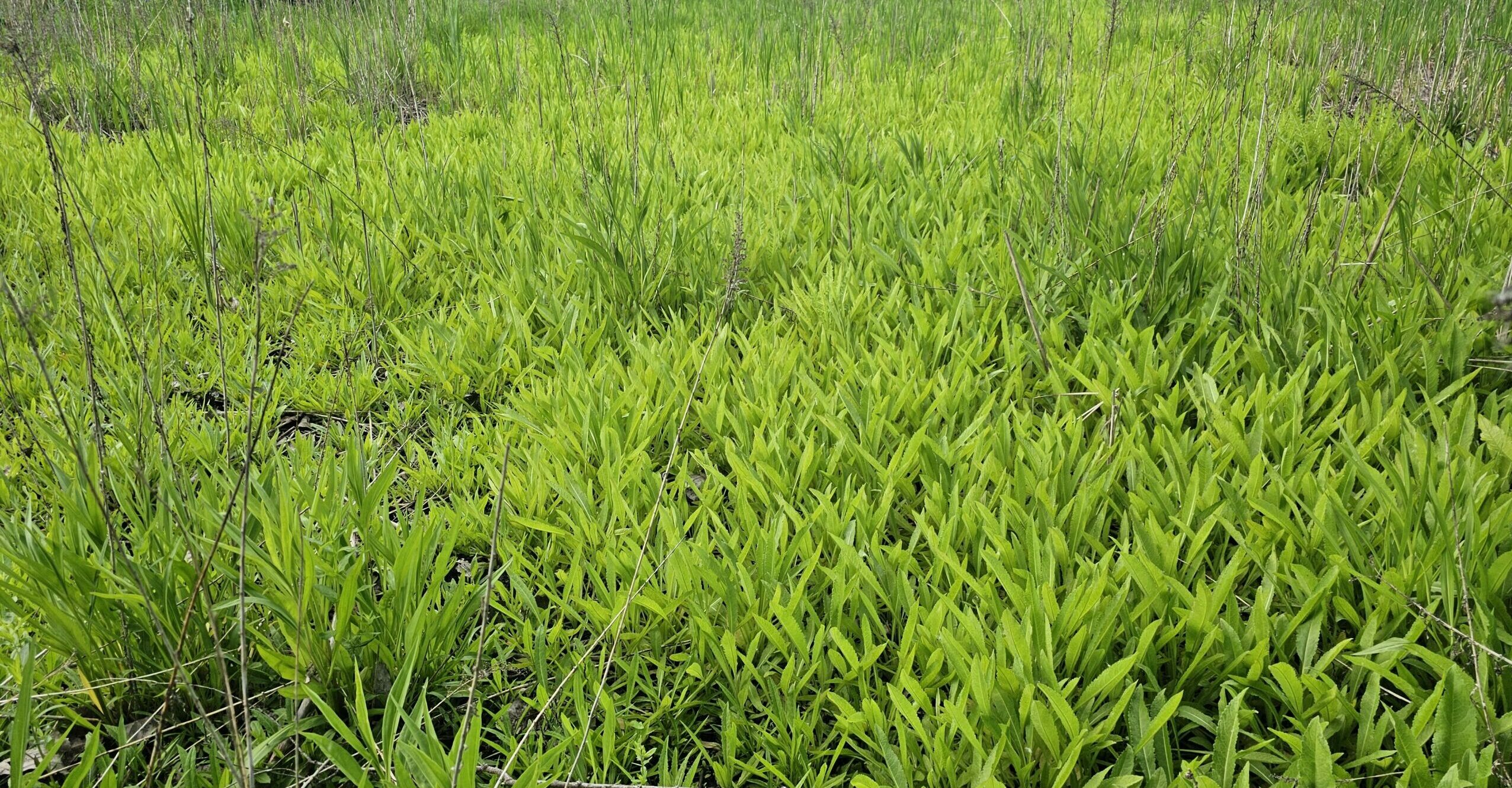
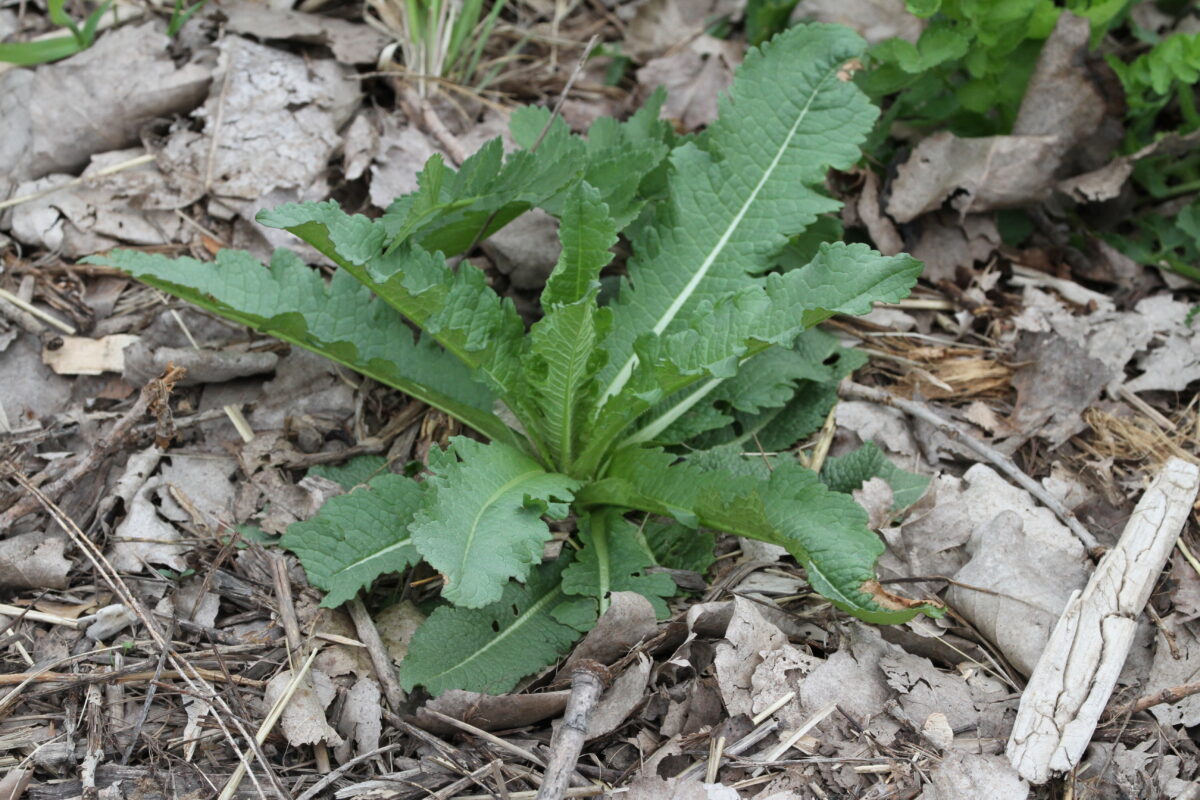
Thick stand of teasel, Dipsacus sp. rosettes in the early spring. Photo by Mark Micek.
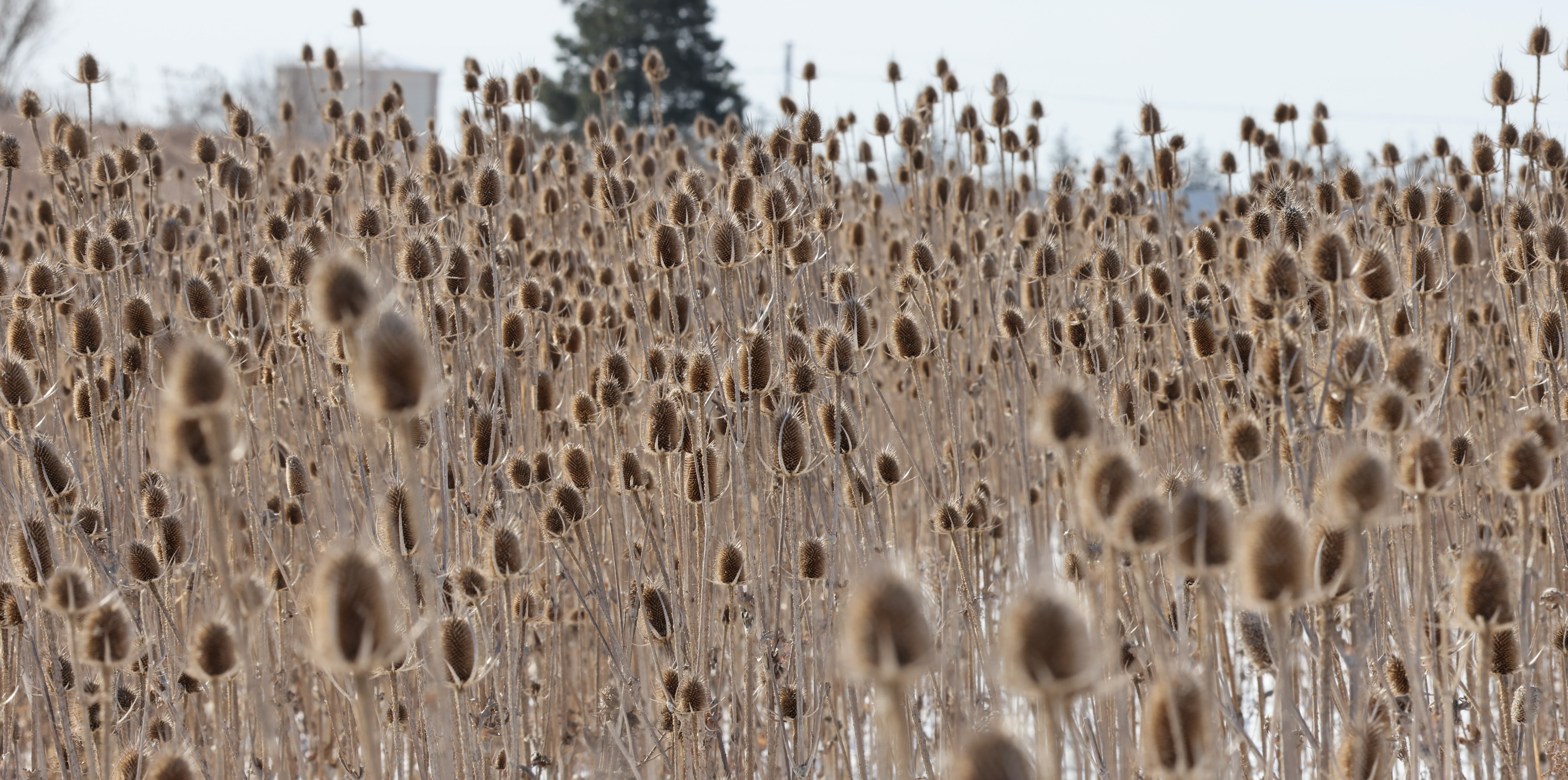
Dense stand of 2nd year teasel, Dipsacus sp. in winter. Photo by Mark Micek.
What Is Its Life Cycle?
Teasel is a biennial plant, meaning it completes its lifecycle in two years. The first year, it is a low growing rosette that has many layers of large, long leaves that easily crowd out other species. Teasel can easily become a monoculture this way. The leaves of the rosettes of both species are very similar with the cut-leaf teasel having more coarse edges.
In its second year of life the teasel bolts and shoots up a spikey stalk from two to six feet tall that has opposite leaves in intervals up the stem. These leaves clasp the stem and can collect water. The common teasel’s leaves in this stage look largely like its rosette stage with ruffled edges. The cut-leaf teasel’s leaves have more of a dramatic change with the leaves becoming deeply lobed. Each stalk ends with a single cylindrical flowerhead that is covered in tiny flowers in late summer and early fall. The common teasel has more purple flowers where the cut-leaf teasel has white flowers. These then dry into a spikey seedhead, and as mentioned before, the seedhead contains hundreds of seeds and those seeds can be viable for more than one season.
Teasel likes sunlight and will invade both disturbed areas like roadsides and vacant lots and established natural areas like prairies and savannas equally.
How Can You Control It?
To control teasel, it can be foliar treated in both stages of its lifecycle with an appropriate herbicide and can also be manually removed. The stalks can be cut when they are flowering but before they go to seed. If cut too early in the flowering stage, they may re-bolt and produce a second flower, so follow-up mowing may be necessary. The plant can also be dug up. If manually removing teasel, make sure to get as much of the root as possible and bag and remove flower heads.
Please follow all laws and labels and safety precautions when applying herbicides. If hiring a company to perform this work, all applicators should be licensed to apply herbicides in your state.
Blooming cut-leaf teasel, Dipsacus lacniatus. Photo by Mark Micek
What Can You Plant Instead?
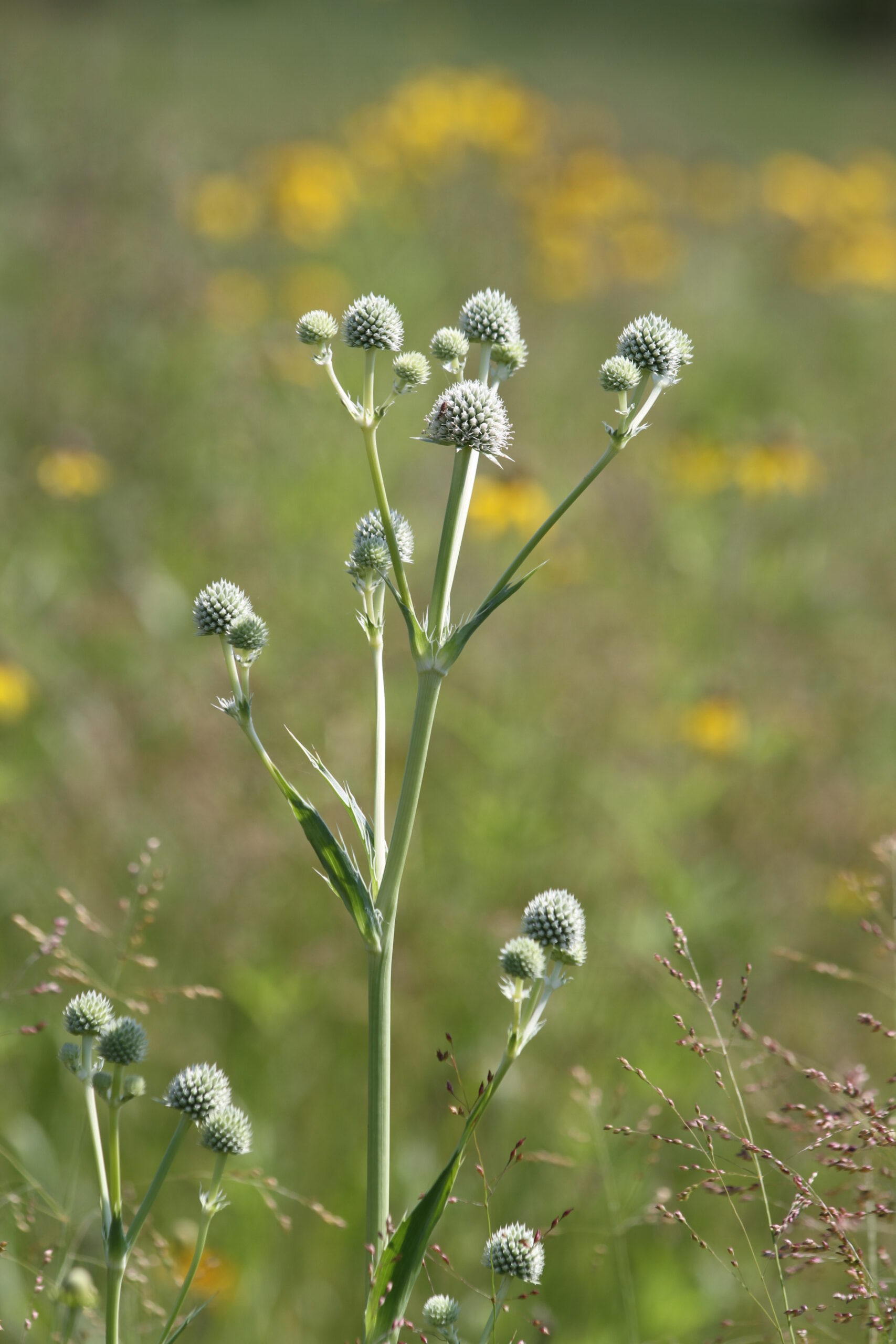
If you’re looking for a substitute for teasel for your yard or flower arrangements, rattlesnake master (Eryngium yuccifolium) has a similar look. It is a prairie wildflower that while much smaller than the teasel has similar seed heads that are spikey and made of many smaller flowers. It also will grow in similar conditions to the teasel, but it is native and less aggressive.
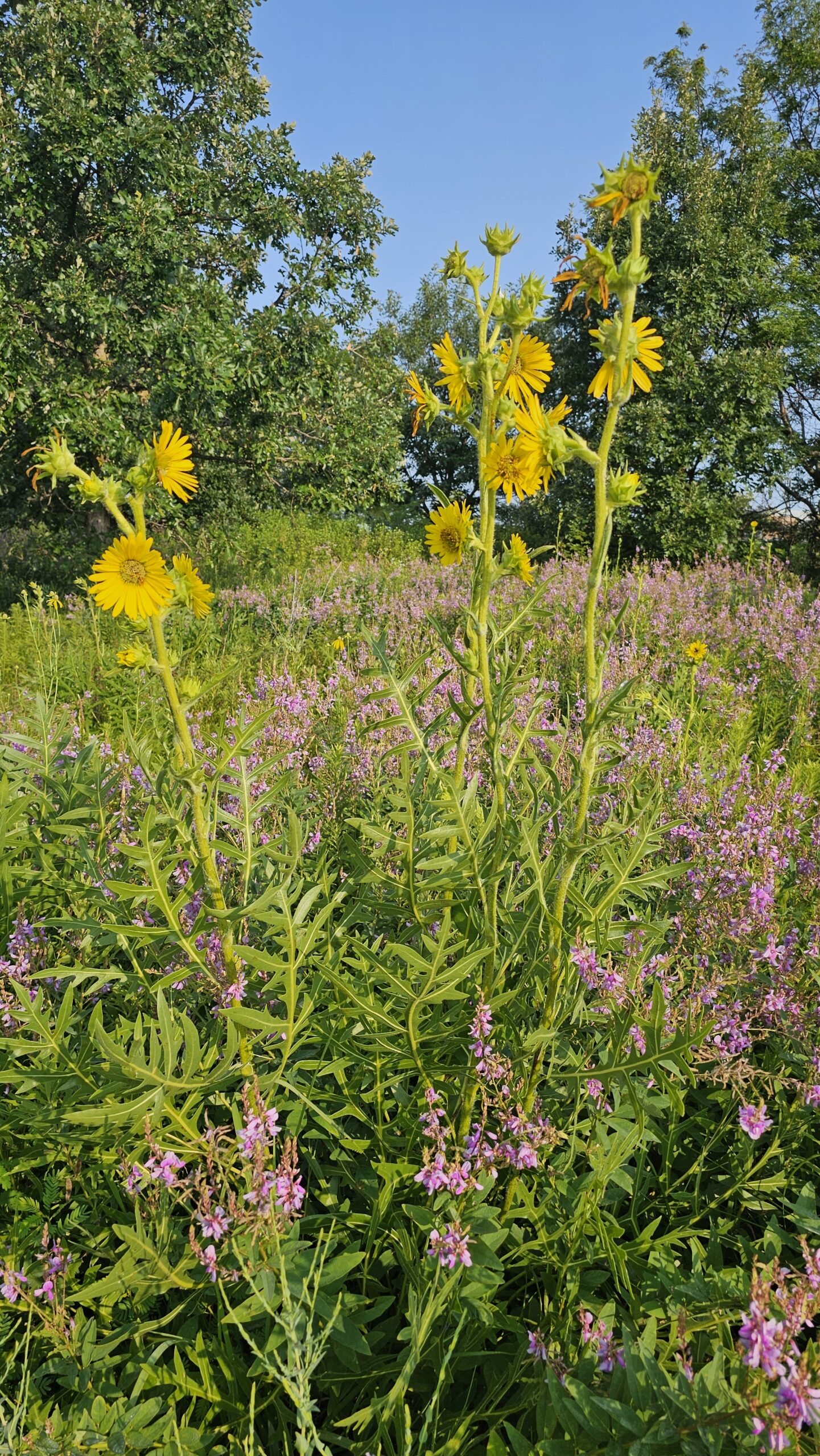
If you’re looking for height, the compass plant (Silphium laciniatum) and the more aggressive cup plant (Silphium perfoliatum) are other good substitutes for teasel as they are tall sturdy plants with interesting leaves. Compass plant has deeply lobed leaves closer to the ground and is a good anchor species for a new planting as they have deep roots and can live for decades. Cup plant has clasping leaves at intervals up the stem that can hold water like the teasel and will attract birds and pollinators alike. These plants don’t have similar flowers to the teasel but would be great splashes of color.
Rattlesnake master, Eryngium yuccifolium just starting to bloom with white flowers. Photo by Mark Micek.
Compass plant, Silphium laciniatum, in bloom. Photo by Mark Micek.