When we are working in a natural area, people will frequently ask our crews what we are doing, and why. Seeing a plant with delicate white or yellow flowers being removed or treated with herbicide often raises questions. A weed is simply a plant out of place, so while sweet clover may appear to be a beautiful addition to the landscape, it does not belong in native grasslands or prairies due to the damage it causes.
What Is Sweet Clover?
Sweet clover, which includes both white sweet clover (Melitotus alba) and yellow sweet clover (Melitotus officinalis), is a biennial herbaceous plant that grows abundantly on disturbed lands, roadsides, and abandoned fields. Both species grow tall in the second year and can form a bush-like structure.
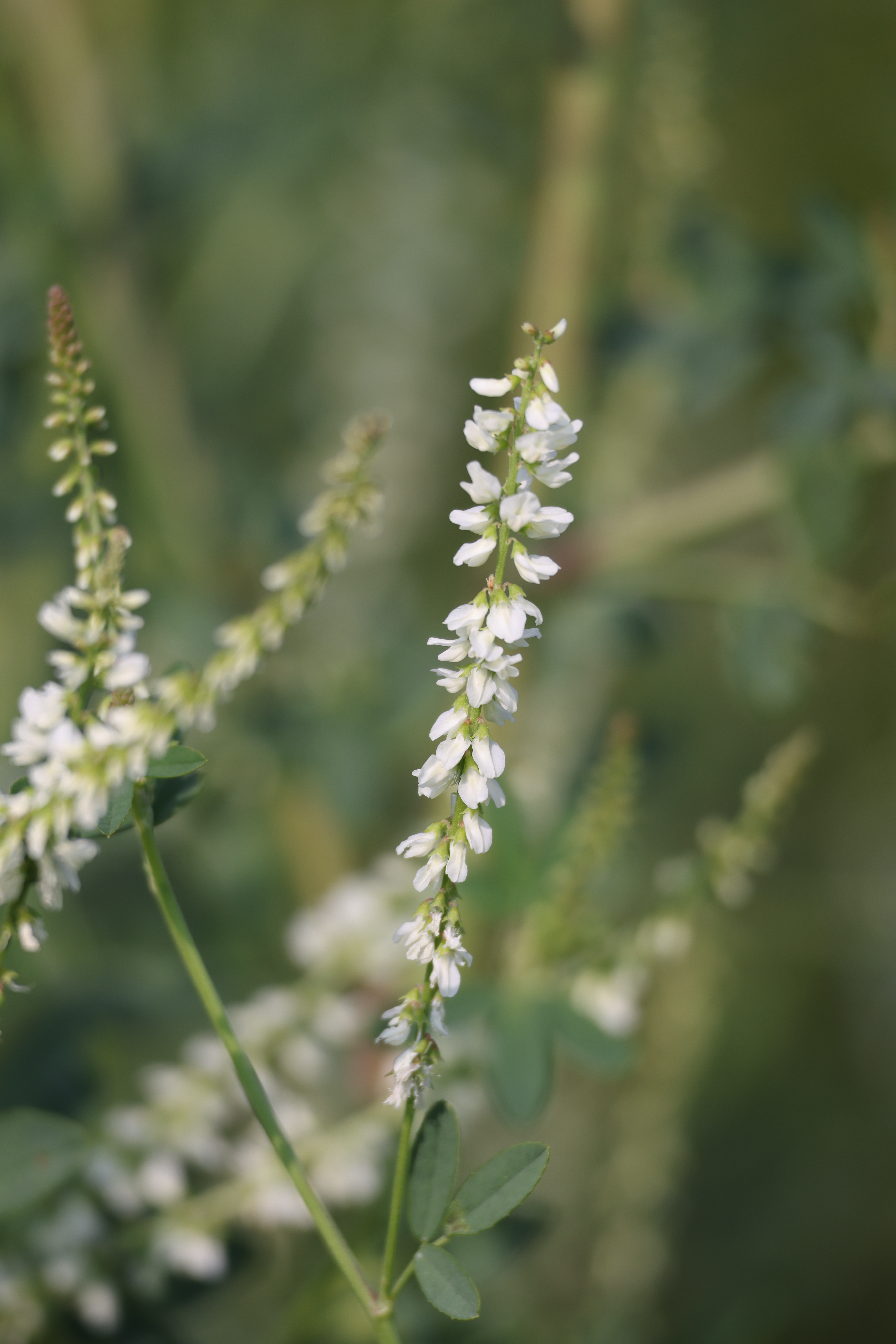
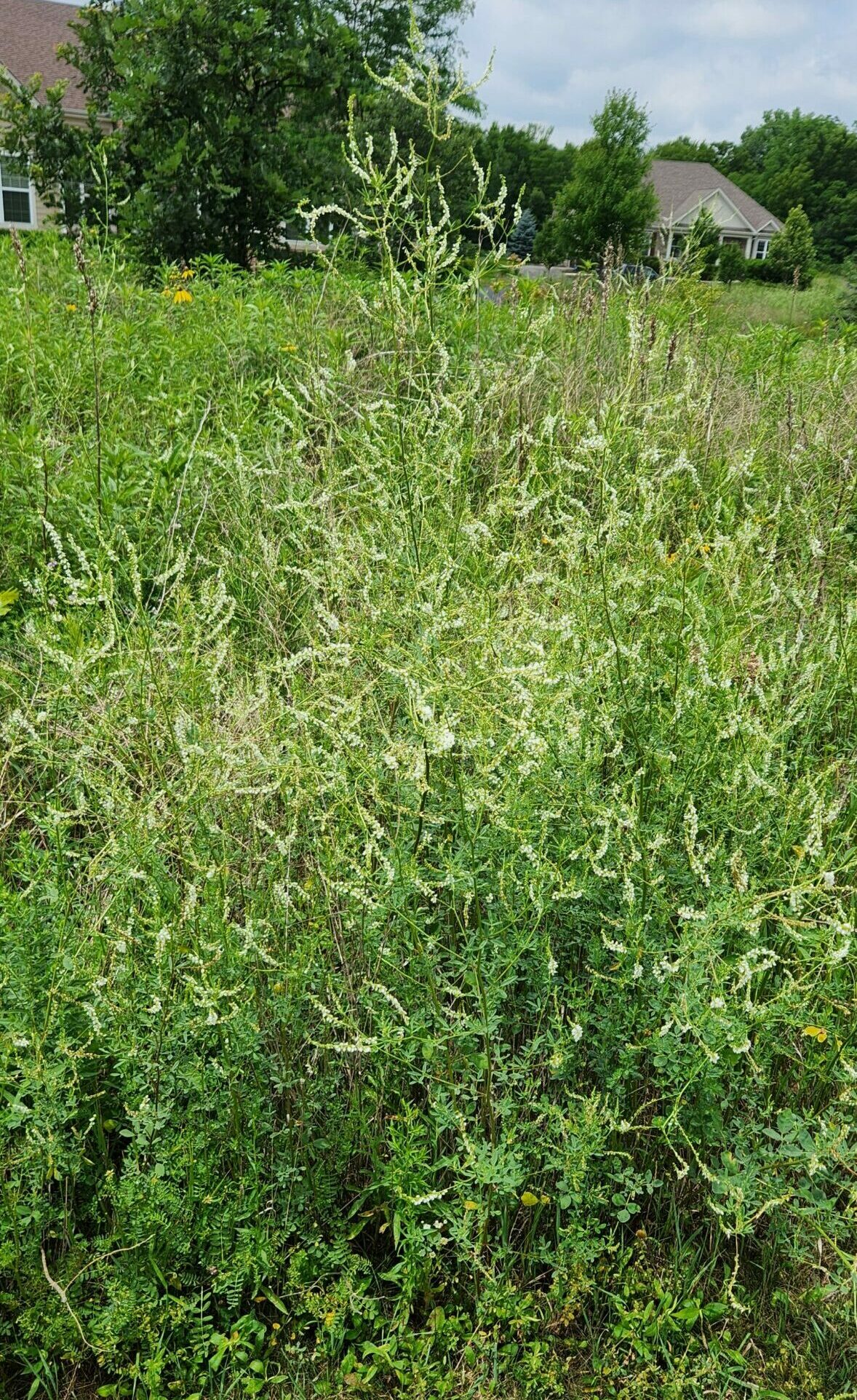
White sweet clover has alternate leaves; each leaf is comprised of three leaflets giving it an unmistakable clover appearance. However, the edges of the leaves are toothed, creating a jagged outline. This plant can grow to be between two and nine feet and flowers from midsummer into early autumn.
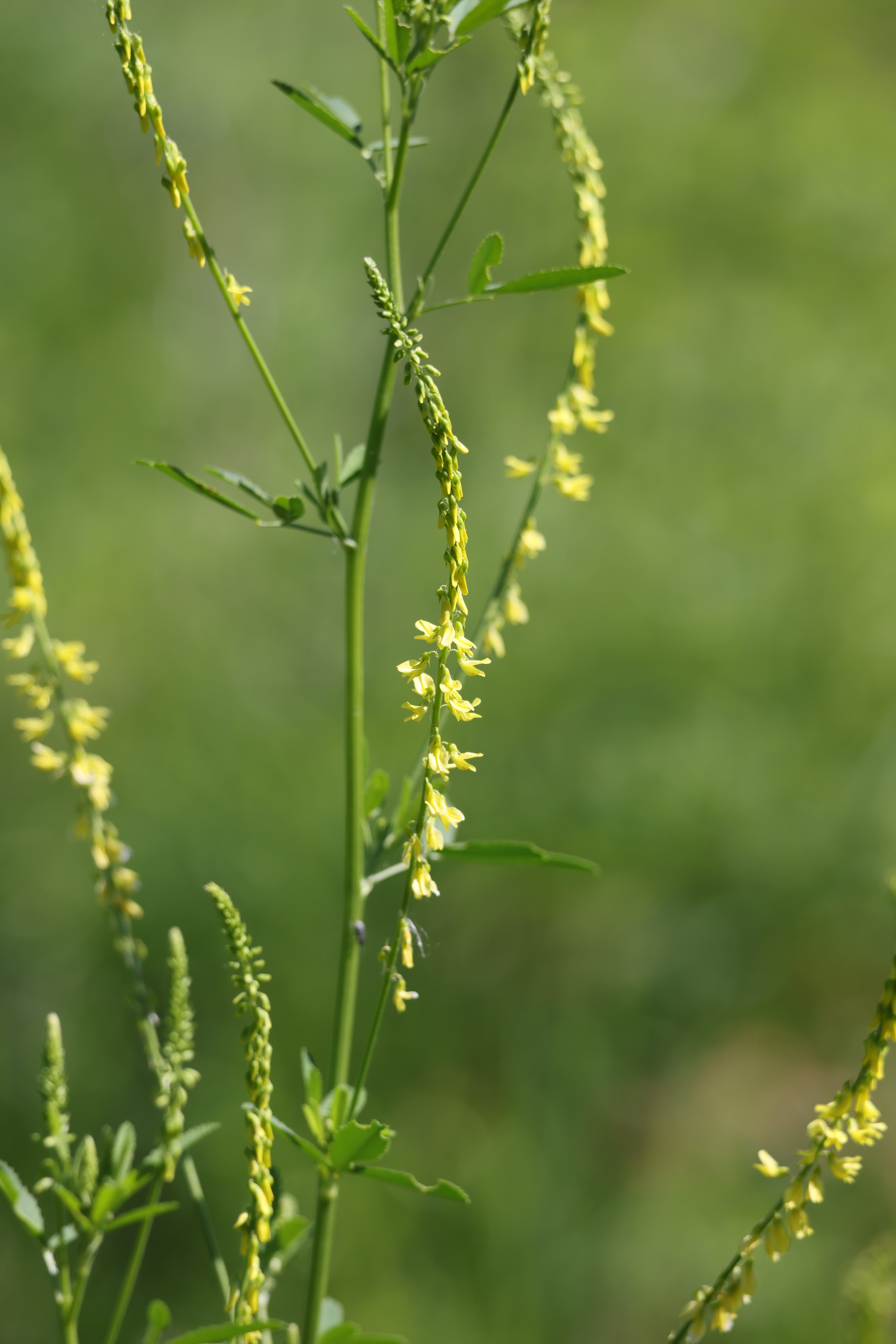
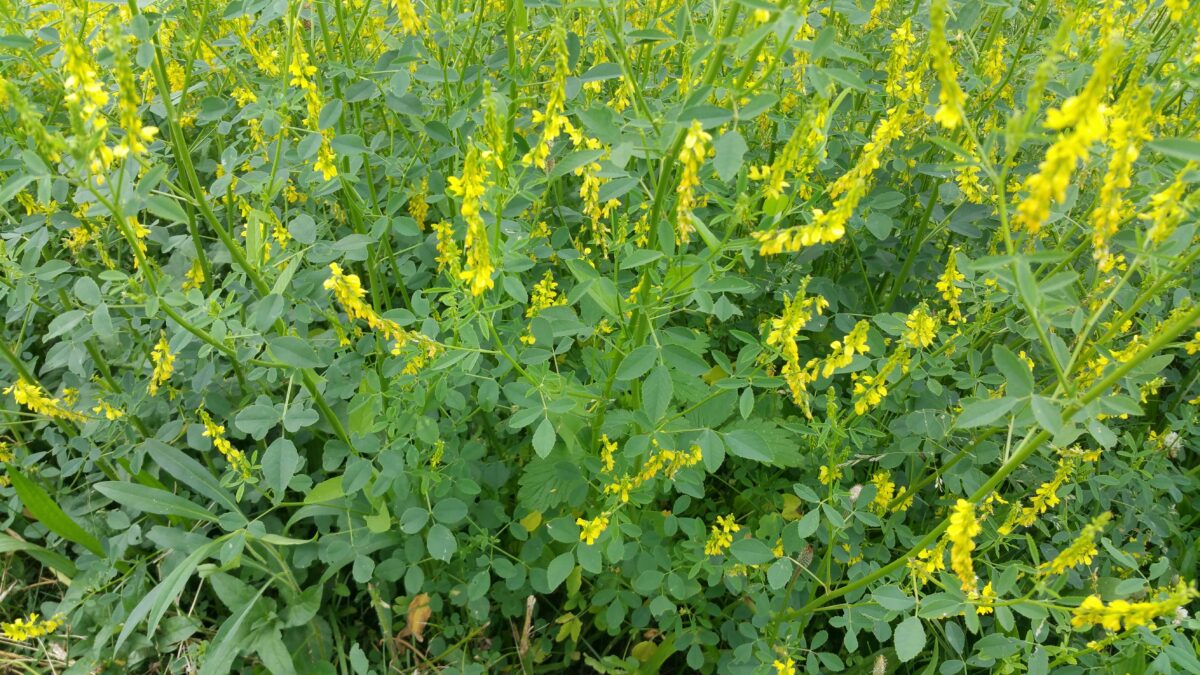
Yellow sweet clover is similar in appearance to white sweet clover, although it grows between two and six feet. When not in flower, these two species can be identified from one another based on technical differences of the leaves. However, the eradication method and invasive nature of the two species are the same.
The flowering spike of yellow sweet clover, Melilotus officinalis. Photo by Mark Micek.
Blooming flower spike of white sweet clover, Melilotus alba. Photo by Mark Micek.
Where Did It Come From?
Sweet clover was introduced to North America from Europe and Asia as a forage crop and for soil improvement. However, it escaped cultivation and continues to invade native habitats, where it can outcompete and displace desirable species. This invasion reduces biodiversity and alters the structure of native plant communities.
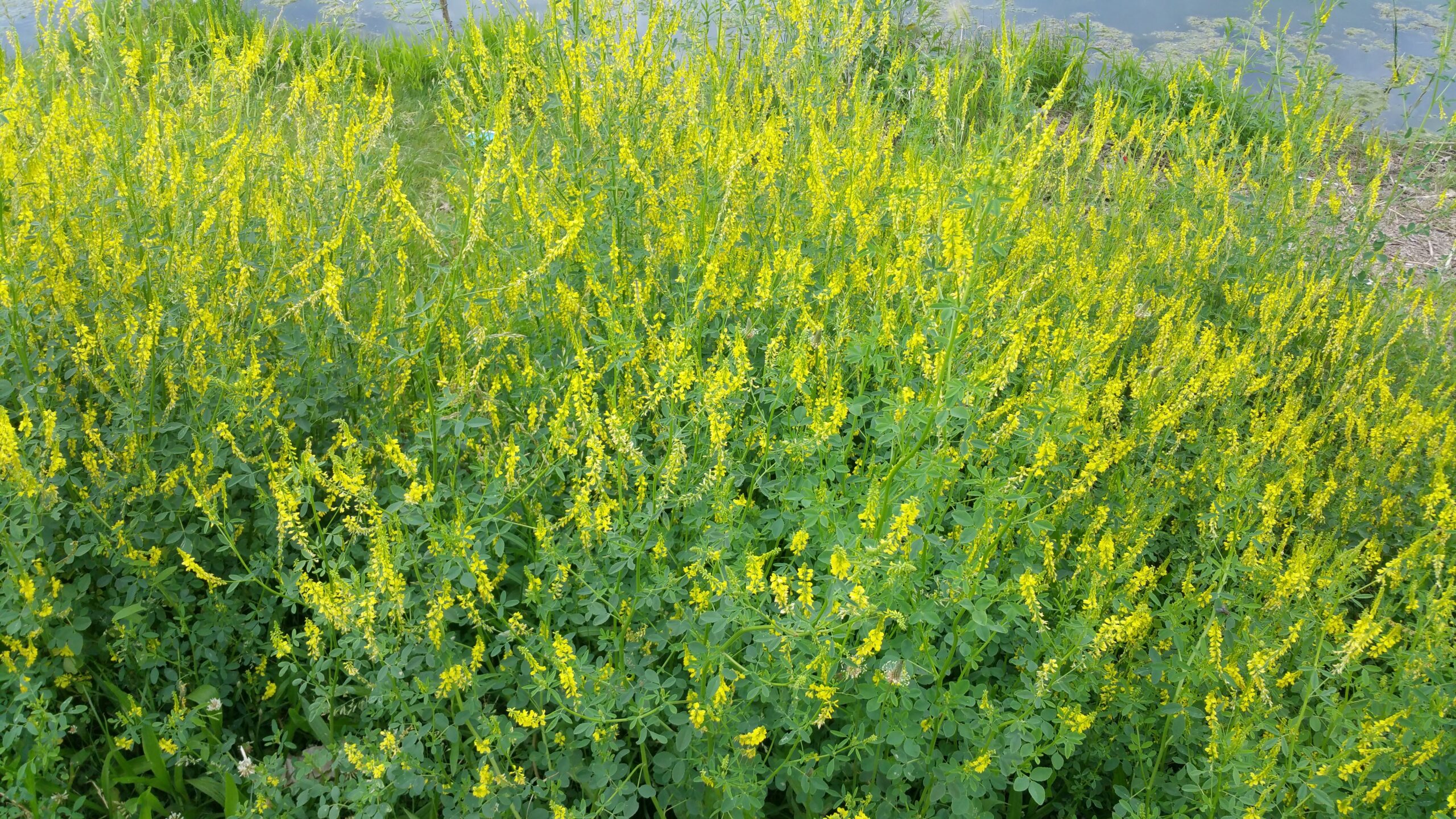
Monoculture of yellow sweet clover, Melilotus officinalis crowding out native plants. Photo by Mark Micek
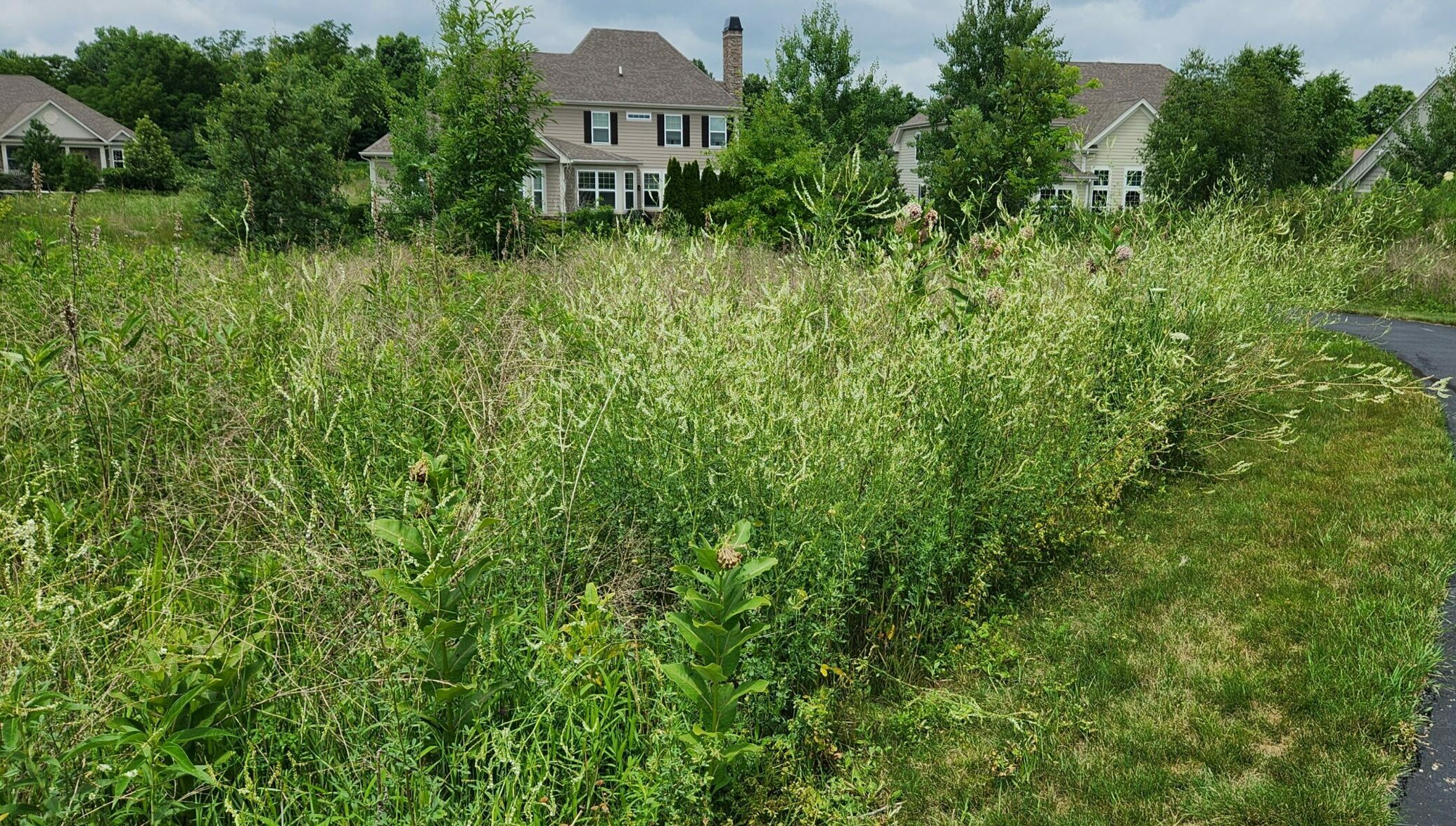
White sweet clover, Melilotus alba growing along a path. Photo by Mark Micek.
What Is Its Life Cycle?
Sweet clover is a biennial plant, meaning it completes its life cycle in two years. In the first year, it grows as a low rosette of leaves. In the second year, it bolts into a tall, flowering plant. Sweet clover produces small, white or yellow flowers that are densely crowded along the top two to six inches of the central stem. Each flower produces one or two small, hard seeds that can remain viable in the soil for over 30 years, making it a persistent invader.
How Can You Control It?
There are three main methods to control sweet clover: mechanical control, chemical control, and prescribed burning. Hand pulling can be done somewhat easily if the plant is growing in loose soil, or after a rain. Removing as much of the root system as possible will help prevent resprouting. Mowing is also very effective if done while the plant is in peak flower, before seeds form. If you mow too early, the plant may try to re-flower, so a second mowing may be required. This is the preferred method of control for both larger and smaller populations in most cases.
Chemical control is effective, but due to the way the plant grows, it can be tricky to treat the plant without some unwanted collateral damage. Using herbicides requires caution, especially in sensitive habitats. Always follow label instructions, local environmental protection laws, wear the proper protective equipment, and use formulations that are safe for the specific habitat.
Lastly, prescribed burning can be used in conjunction with the other methods mentioned to control sweet clover. Fire can actually stimulate growth of clovers, so on its own, burning will not likely be an effective method of control. Pairing burning with the other methods mentioned above will help manage the sweet clover while also providing the more desirable native species with a competitive advantage.
The way sweet clovers grow intertwined with other plants make them difficult to control with herbicide without collateral damage. Photo by Mark Micek.
What Can You Plant Instead?
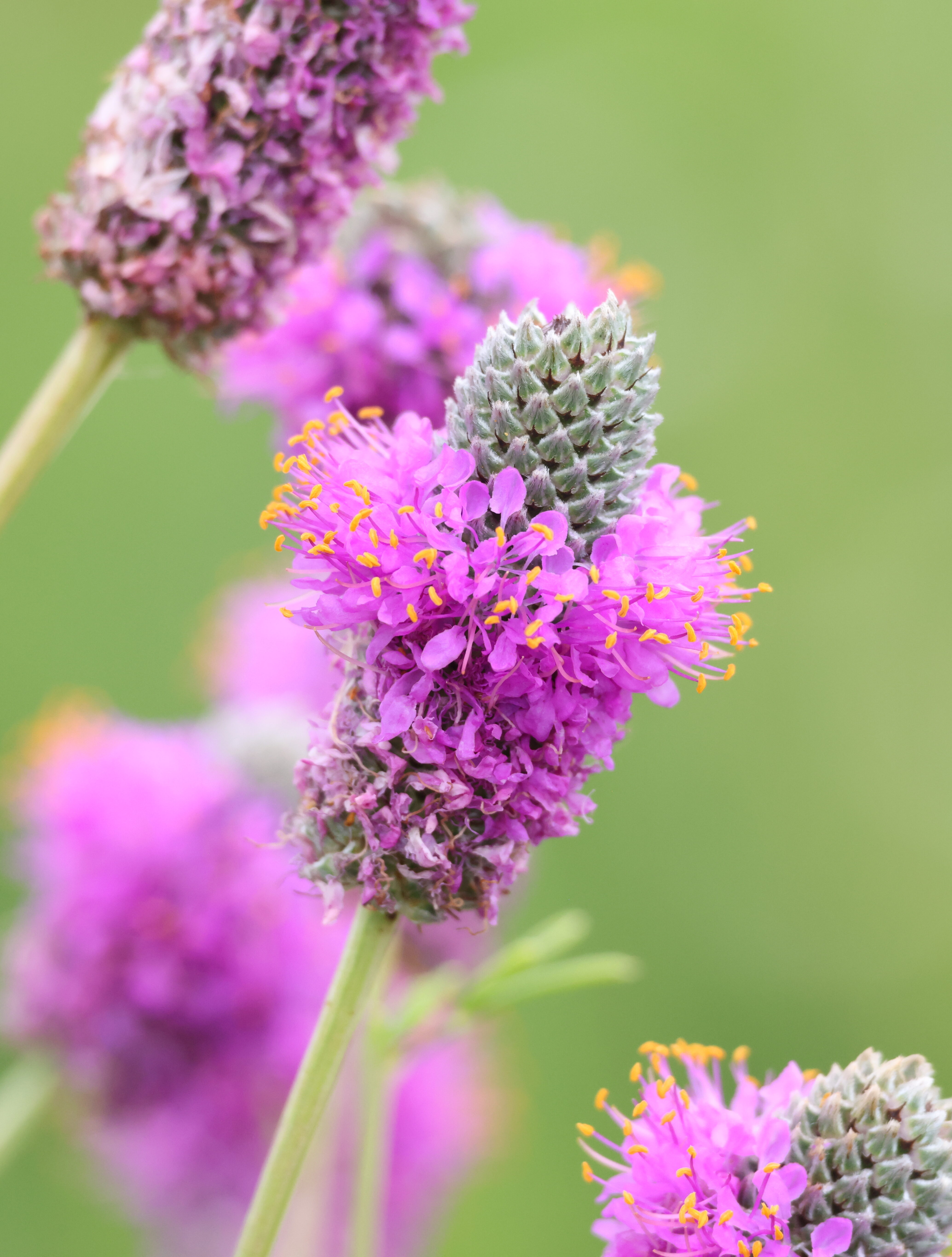
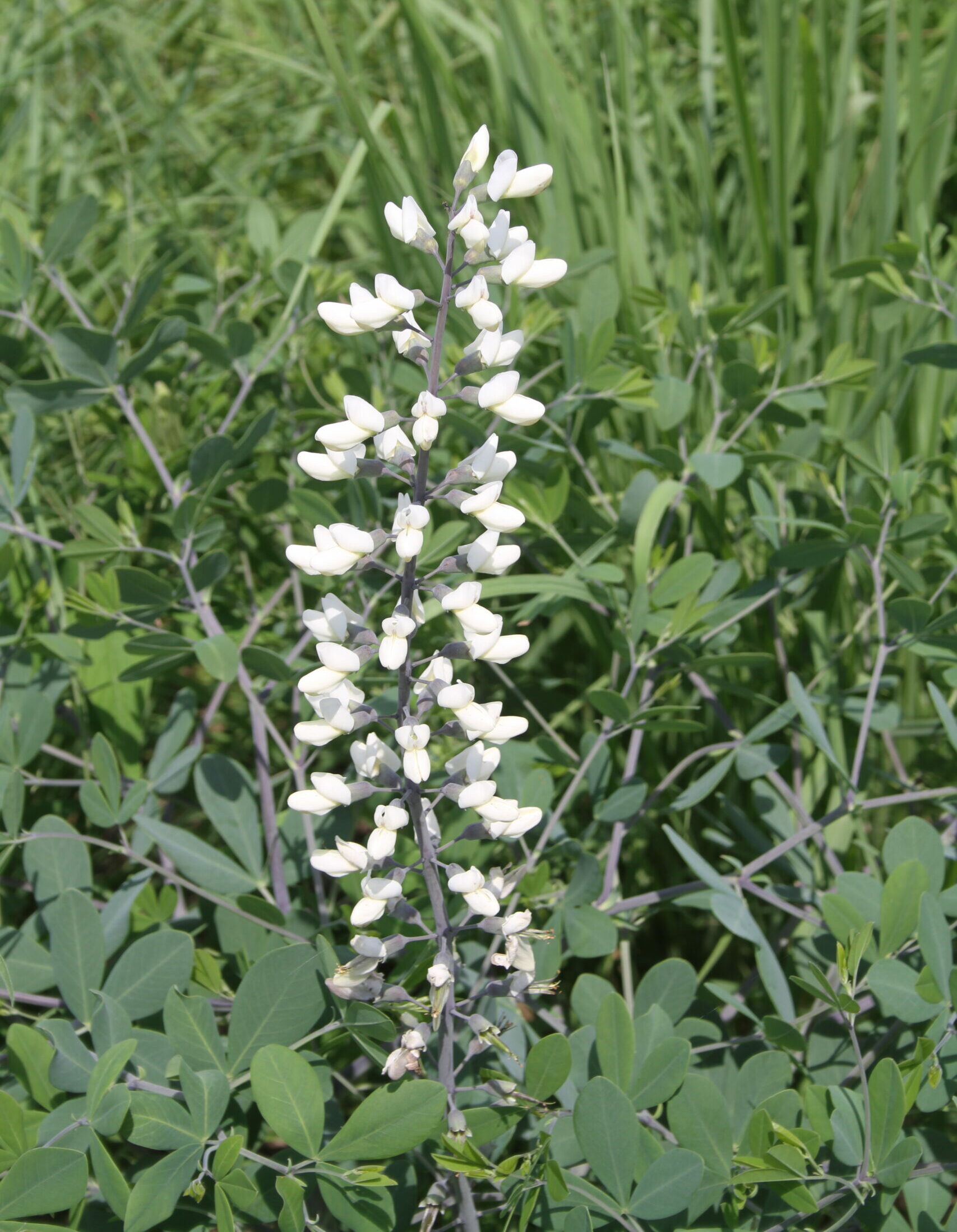
Sweet clover is part of the family and there are plenty of native species within that family that can be planted instead. Purple prairie clover (Dalea purpurea) is a delicate species with bright purple flowers that thrives in full sun. Another option are the Indigo species, white wild indigo (Baptisia alba) and cream wild indigo (Baptisia leucantha) which are taller plants with larger flowers. These plants thrive in sun and drier soil.
Purple prairie clover, Dalea purpurea blooming. Photo by Mark Micek.
Blooming white wild indigo, Baptisia alba. Photo by Mark Micek.