When you come across a wall of the invasive common reed (Phragmites australis) you can’t help but marvel at how tall and dense the monocultures of this grass can get. This aggressive invader can now be found in wetlands and ditches throughout much of the contiguous United States. Whether driving past wetlands that were once dominated by cattails, or just down the highways in northern IL, you have probably encountered this tall grass without knowing it. If left unmanaged, it spreads rapidly and poses numerous threats to local ecosystems and residential communities.
What Is Common Reed?
Common reed, often referred to as Phragmites, is a very tall grass (commonly up to 15 feet) that grows mostly through rhizomes and forms a dense stand that chokes out most other vegetation, including cattails. Newly formed populations of common reed may have started from seed, or potentially by movement of soil containing roots from existing plants. It is important to note that if a stalk of common reed lays down on the ground it can also act as a stolon to send up new shoots and expand the monoculture even further.
While it often prefers to grow in wetlands, man-made basins, ditches, and along shorelines, it will also spread into adjacent dry areas if left unchecked. It has an extensive root system capable of transporting much needed water to portions of the plant growing in drier soils.
The thick stands of common reed not only reduce biodiversity by outcompeting all other vegetation, they also pose a hazard to neighborhoods with homes nearby. They are extremely flammable during the dormant season after they have dried out. Since the plant grows very densely and to great heights, when it burns it puts out an extraordinary amount of heat which can cause damage to desirable vegetation and structures within 50 to 100 feet of it. For this reason, we highly recommend that it be controlled and removed in residential areas. While it can be burned safely under certain conditions, it is often best to mechanically remove the plant to avoid unnecessary risk.
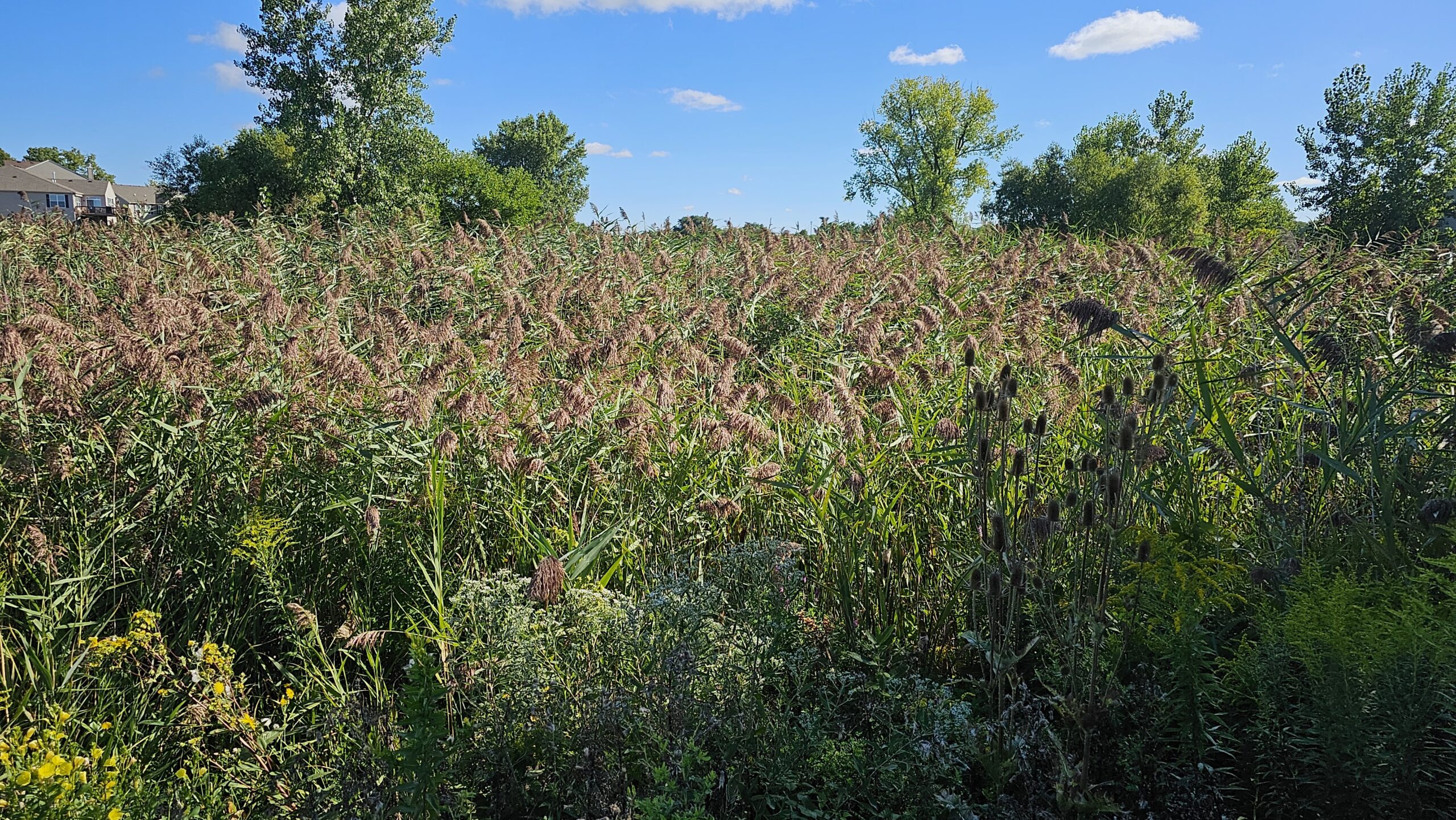
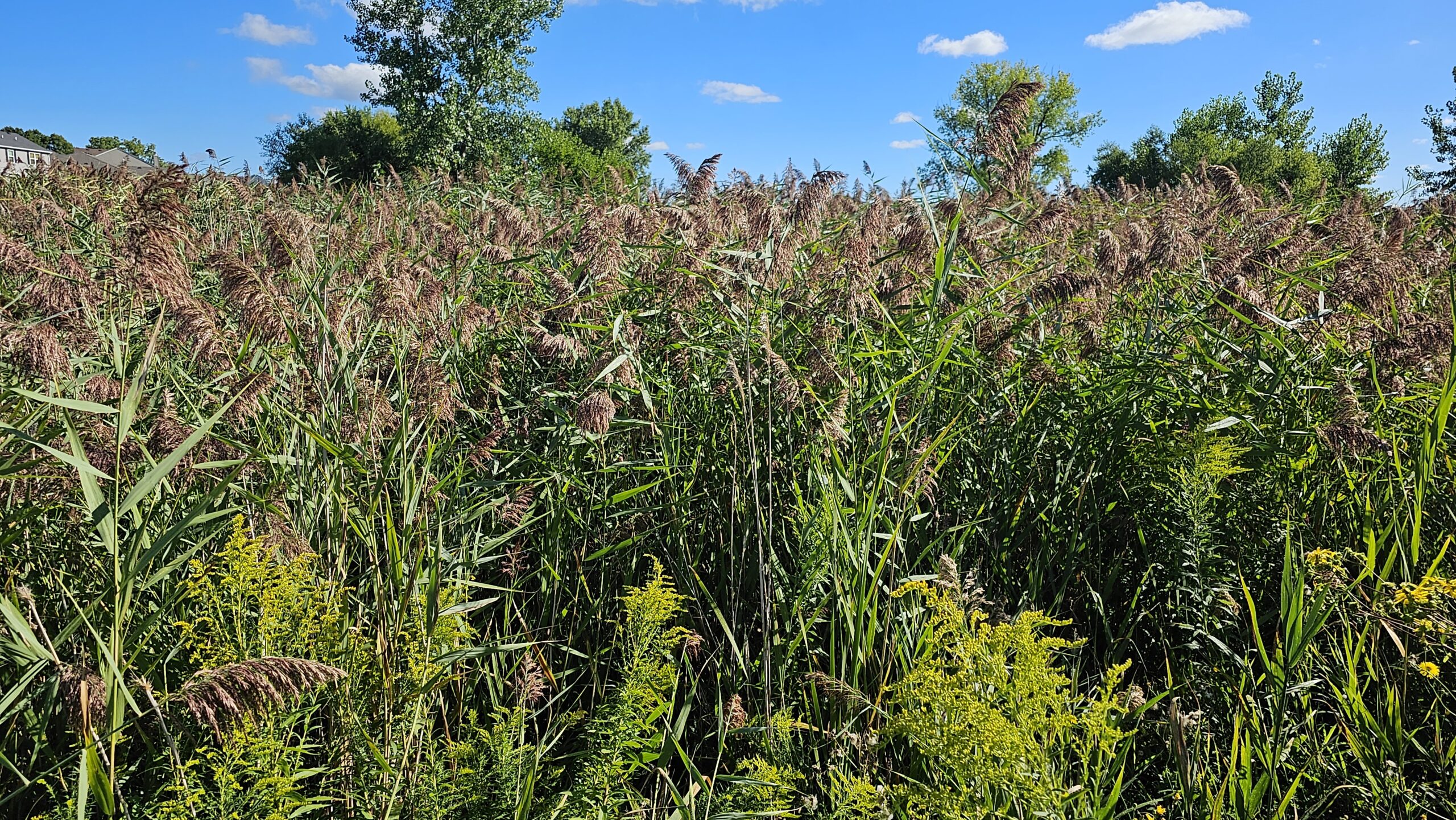
A large stand of common reed (Phragmites australis) in the summer. Photo by Mark Micek.
Where Did It Come From?
Phragmites australis actually comes in a few different subspecies and they aren’t all non-native or invasive. The subspecies americanus is native to much of the United States and can be found in remnant or well managed wetlands. While it can be difficult to tell the difference between the native and non-native varieties, the most obvious characteristic for identification is how much less dense the native stands grow. The native variety is more likely to cohabitate with other vegetation without forming monocultures.
The subspecies of concern is australis and it’s the most likely version you will run into in our local natural areas. This variety is native to Europe and Asia and found its way to the US in the 1800’stransporting it to the east coast and the great lakes.
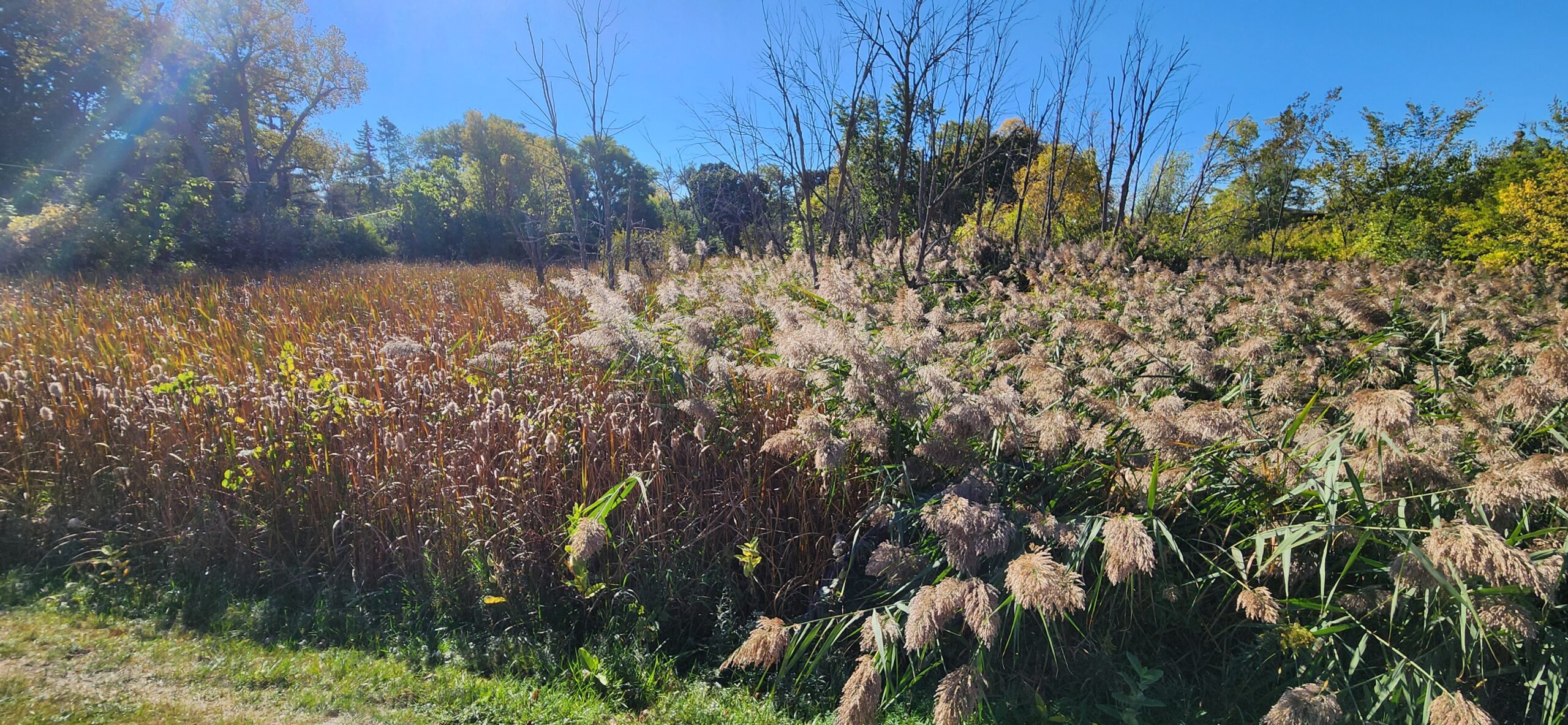
A stand of common reed (Phragmites australis) invading a cattail marsh. Photo by Mark Micek.
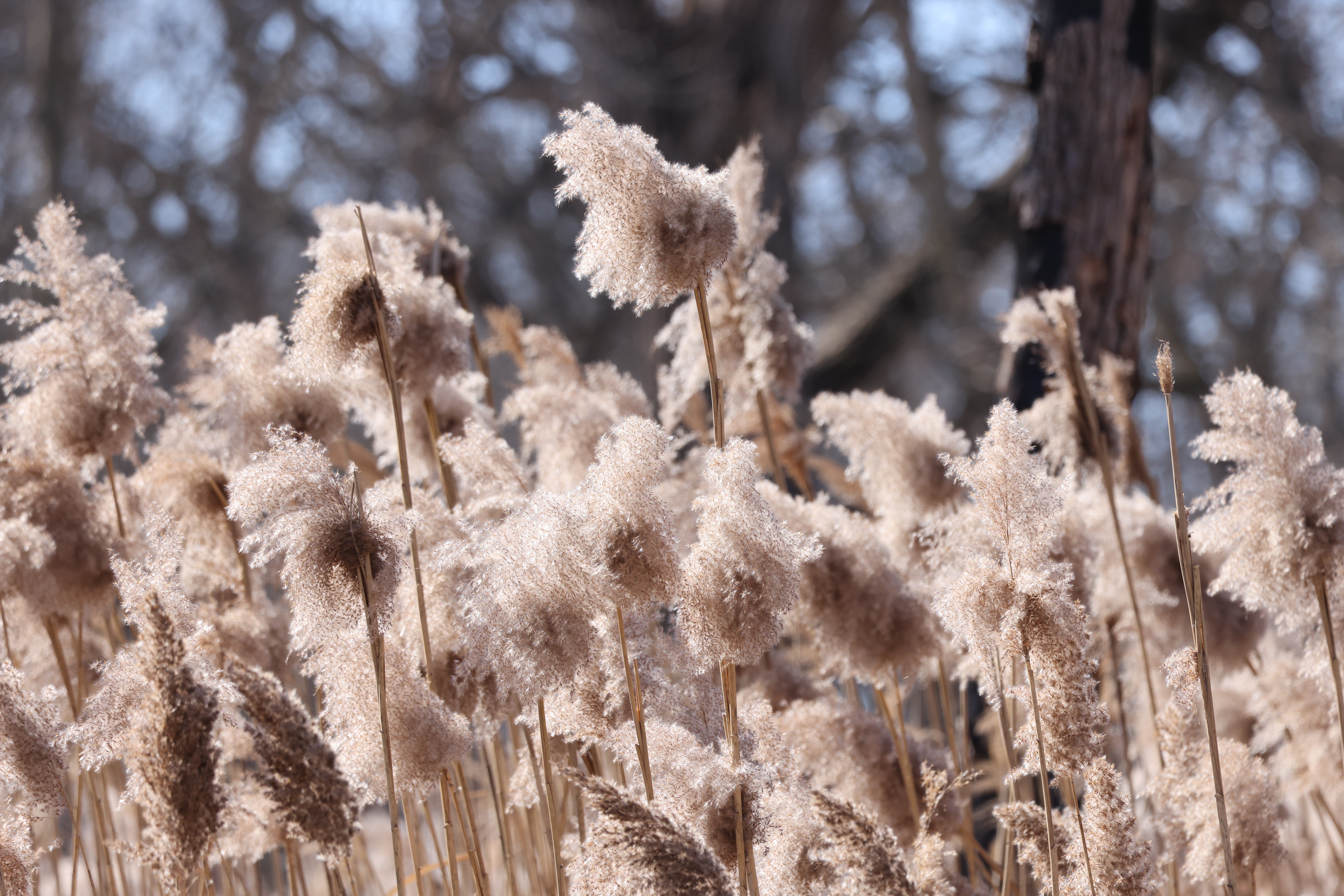
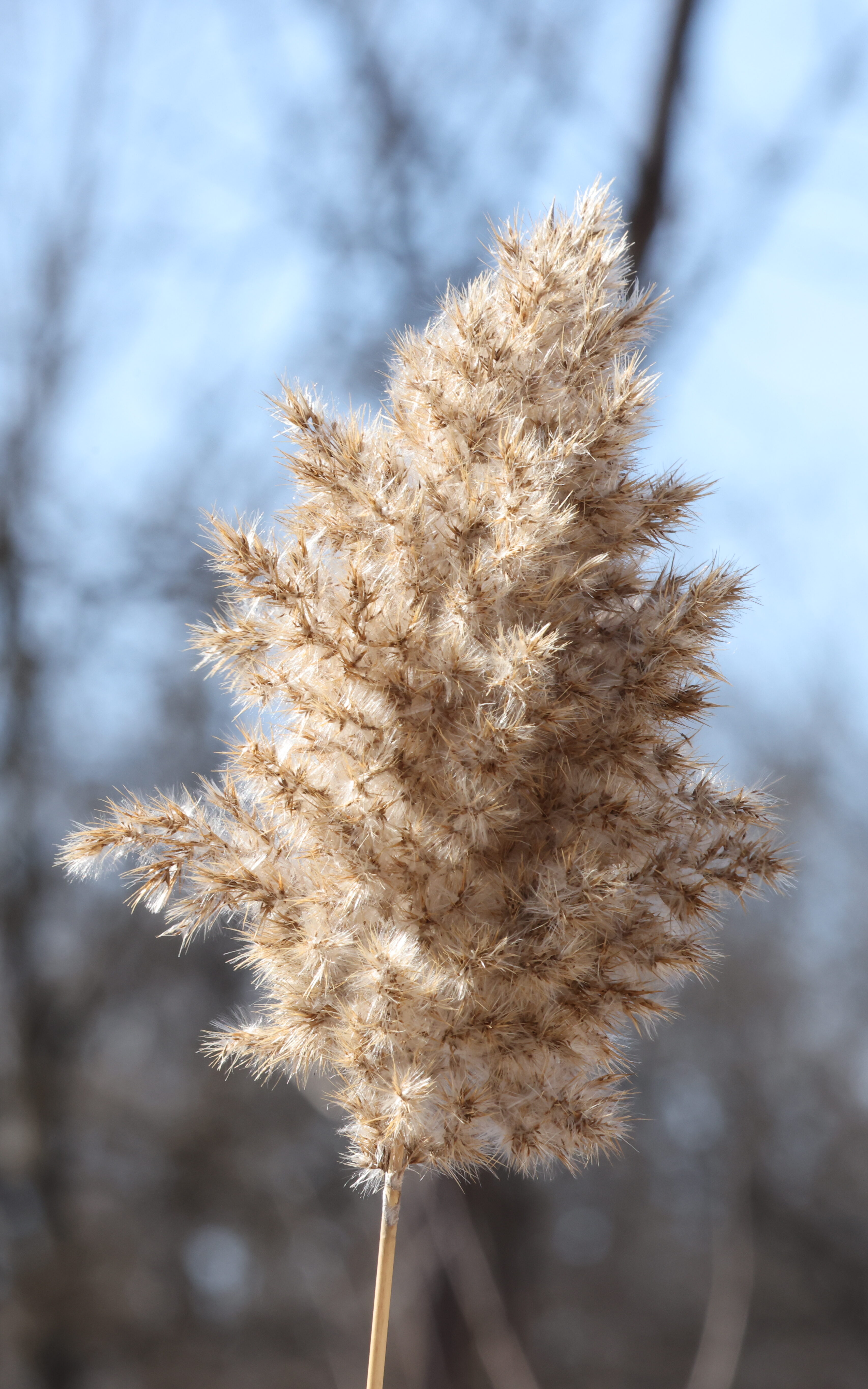
Stand of common reed (Phragmites australis) with seed heads in the winter. Photo by Mark Micek.
What Is Its Life Cycle?
Common reed is a rigid grass with medium to dark green coloration that produces a dense feathery panicle of flowers in the late summer that turns into a dark purple seed head. While many of the seeds from Phragmites may not be the plant is very capable of spreading through both rhizomes underground and stolons above ground. This allows the plant to form extremely dense thickets of stalks which are quite difficult to walk through.
The roots of common reed are very substantial and will grow several feet down into the soil. This extensive root system makes common reed resistant to some control methods and allows it to survive in very harsh climates.
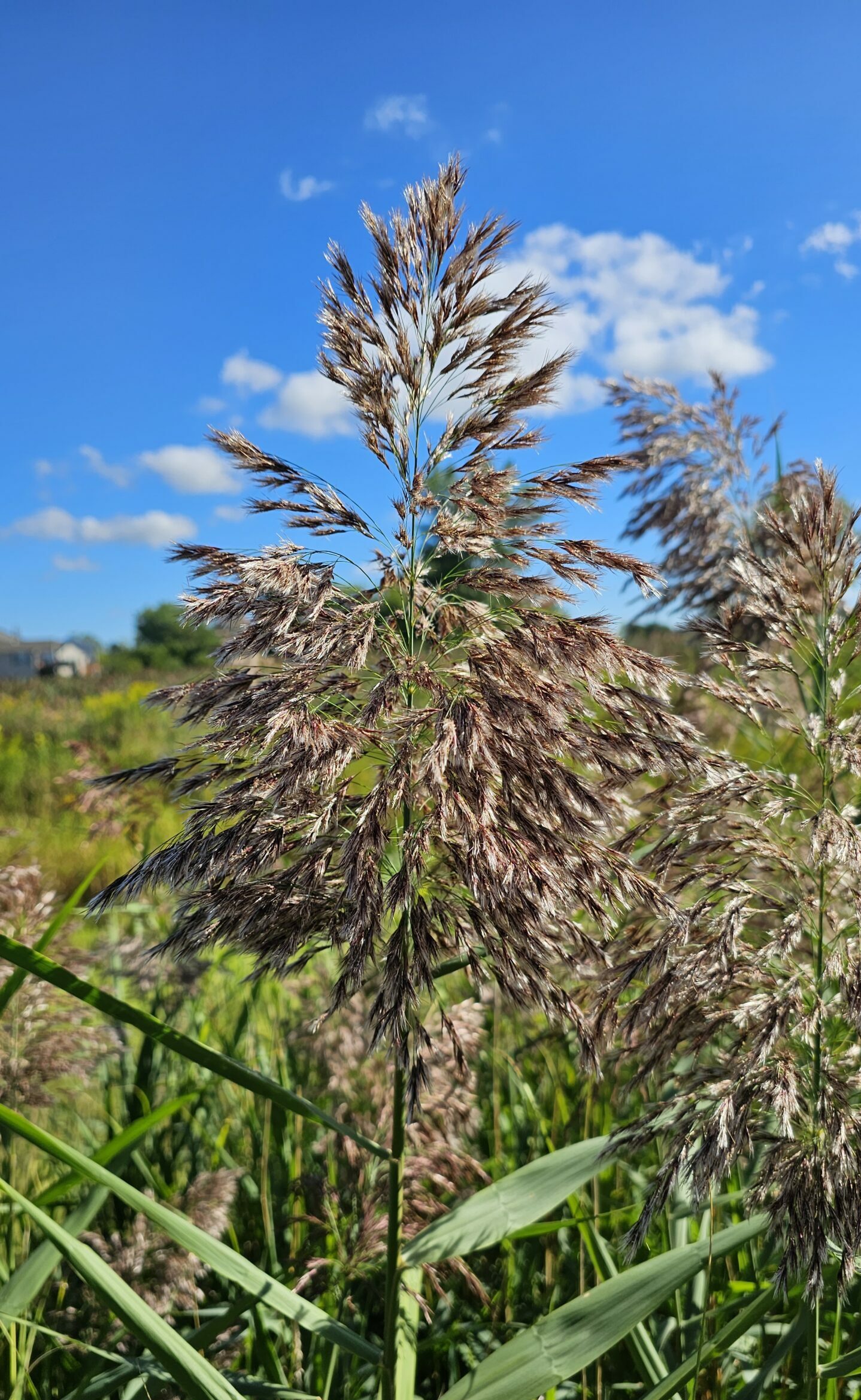
Flowering spike of common reed (Phragmites australis). Photo by Mark Micek.
Seed head of common reed (Phragmites australis) during the winter. Photo by Mark Micek.
How Can You Control It?
Plants that are as hardy as common reed have very few options for effective control. Its vigorous root systems allow it to withstand aggressive mowing and controlled burns. These control options may allow other plants to better cohabitate with the common reed, but ultimately it cannot be completely controlled by mechanical means alone.
In the fall, when the common reed is transporting vital nutrients into its roots for the winter months there is an opportunity to treat the plants with herbicide and achieve very effective control. While you likely will not be able to kill off the entire colony in one treatment, we often see control of 80% or more with this method. For most applications, a Glyphosate herbicide that’s formulated for aquatic use works best and can be sprayed onto the leaves and stems of plants in large stands. With newer stands that still have desirable plants mixed in or along the perimeter of dense stands, you would want to be extra careful and wick (wipe herbicide directly onto the plant with an absorbent applicator attachment or gloved hand) the plants instead of spraying them to avoid unnecessary collateral damage.
If you hire a company to perform the application, ensure they are licensed accordingly.
Treatments done before the fall can often have very mixed results. While they may be effective, often the common reed responds by turning yellow and not growing taller but not completely dying. While the treated stalks may die off over the winter, the common reed will often expand its root system beyond the reach of the treated plants before they go dormant, and control will appear spotty the next season.
For most areas, once the common reed has been killed it is often necessary to manually remove or burn off the dead material to facilitate seeding and establishment of more desirable vegetation. Burning of common reed should only be done by trained professionals if it can be done safely.
A tall dense stand of common reed (Phragmites australis). Photo by Mark Micek.
What Can You Plant Instead?
Several species of native grasses can be seeded or planted as plugs to replace the common reed once you have taken the steps to eliminate it. Prairie cordgrass (Spartina pectinata) does very well in wet prairies and is striking with its tall stature and unique appearance. Bluejoint grass (Calamagrostis canadensis) is a smaller, and shorter species that doesn’t form aggressive stands. Fowl manna grass (Glyceria striata) is a more common grass widely found in wetlands. In addition to grasses, there are a wide variety of native sedges (Carex spp.) that can serve as excellent additions to both wet and dry habitats.
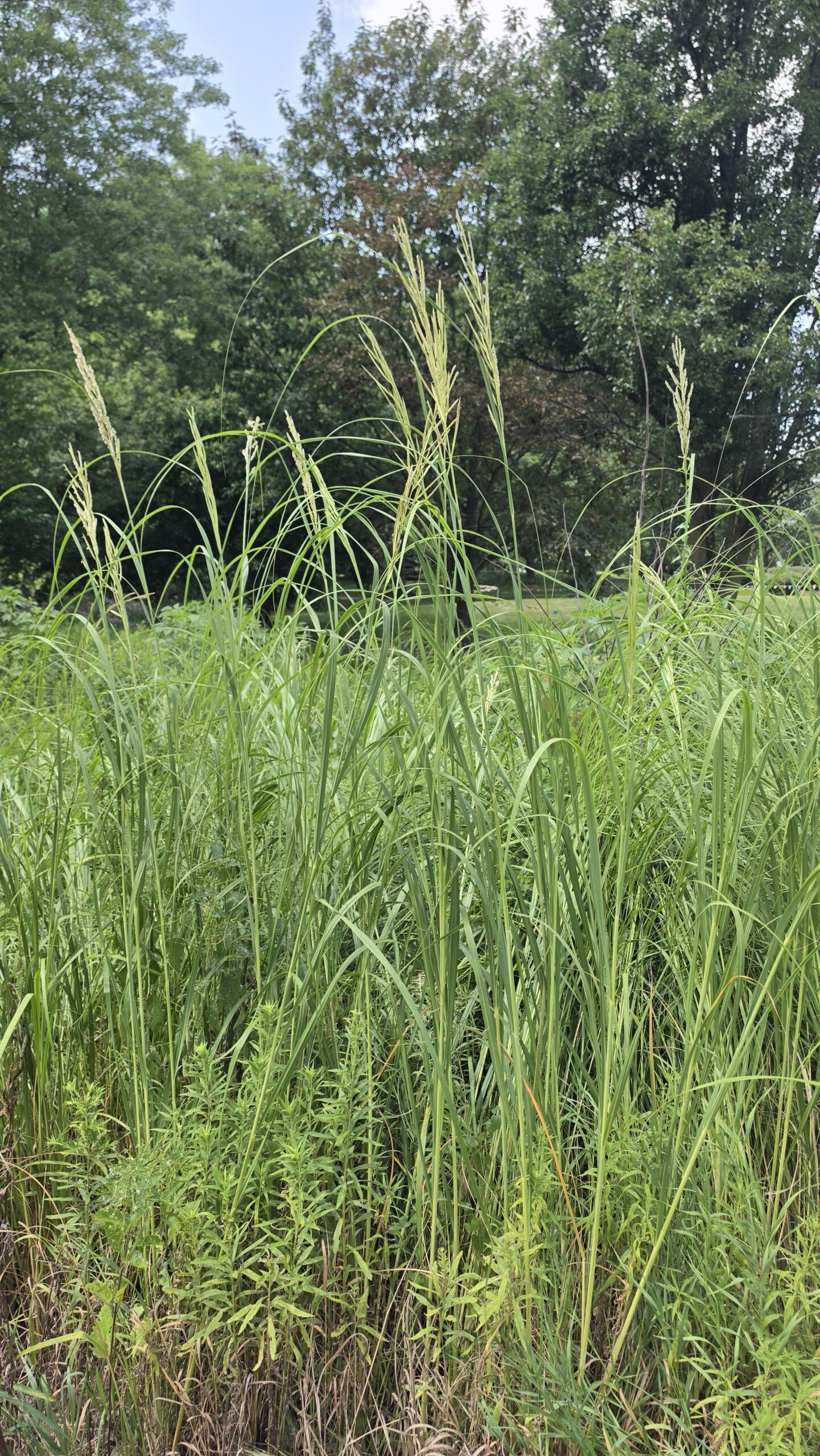
Prairie cordgrass (Spartina pectinata) growing in a wetland with other vegetation. Photo by Mark Micek.
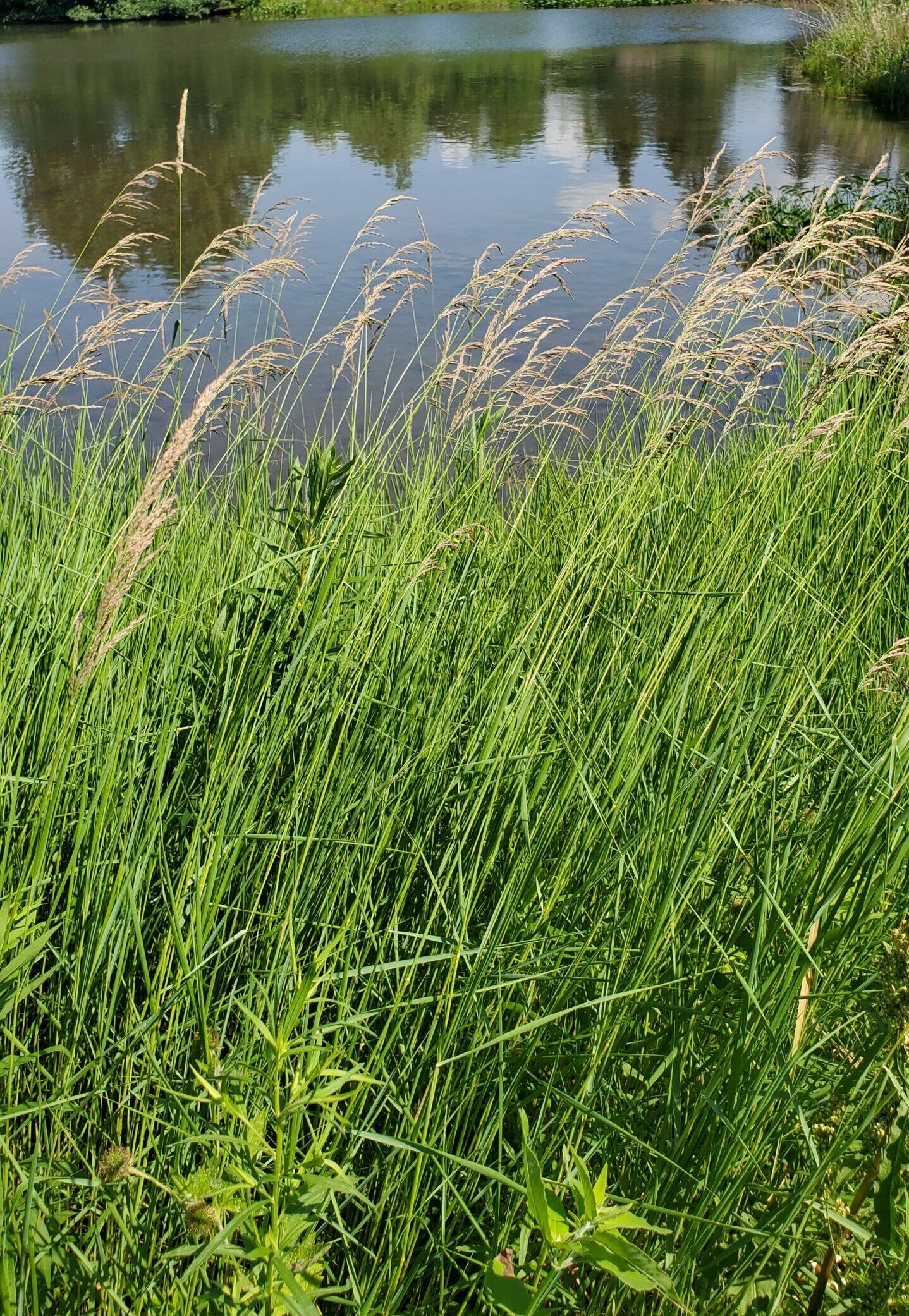
Bluejoint grass (Calamagrostis canadensis) growing along a pond shoreline. Photo by Mark Micek.